The most sophisticated physical innovations of the modern era rarely begin within the walls of a proprietary factory. True craftsmanship today lives at the intersection of digital precision and specialized fabrication partnerships. It’s about the result, not the infrastructure. You might feel the weight of complex technical requirements or fear the high cost of trial and error development. It’s natural to worry about protecting your intellectual property once a vision leaves your desk. You understand that a hobbyist result won’t suffice for a professional presentation; you need a high-fidelity asset that captures every subtle detail of your design.
This guide explores how to make a product prototype without a factory by leveraging advanced technologies like industrial 3D printing and CNC routing. You’ll discover how to transform a conceptual vision into a tangible reality through a curated roadmap from digital file to physical asset. We’ll examine the nuances of material selection and the importance of finding a local fabrication partner in the UAE who values artistic integrity. This journey provides the clarity needed to bridge the gap between an abstract thought and a polished, industrial-grade reality.
• Adopt a strategic "fab-less" approach that prioritizes the orchestration of specialized fabrication ecosystems over the constraints of traditional factory ownership.
• Utilize high-fidelity CAD modeling and 3D scanning to bridge the gap between abstract design and manufacture-ready digital assets with precision.
• Discover how to make a product prototype without a factory by matching your project’s unique complexity with the right medium, from industrial 3D printing to CNC routing.
• Refine your vision through a structured iterative process that moves from initial functional mockups to polished, presentation-grade physical assets.
• Explore the path to bespoke, low-volume production, allowing your conceptual prototype to scale gracefully into a tangible, high-end reality.
The traditional path to physical creation used to be blocked by heavy gates and massive capital requirements. You needed a factory floor before you could hold a finished part. Today, that barrier has dissolved. The "fab-less" model has migrated from the high-tech semiconductor industry into the world of tangible design and physical assets. It allows visionaries to orchestrate complex builds through a network of specialized fabrication partners. Understanding how to make a product prototype without a factory starts with realizing that your role has shifted from a factory manager to a creative director.
Factories are optimized for repetition. They excel at producing thousands of identical items but often struggle with the delicate, iterative nature of a first-of-its-kind asset. A prototype isn't just a step toward production; it's a high-fidelity vessel for your idea. It needs to capture the emotional impact and technical feasibility of your vision. By leveraging specialized labor and advanced machinery like industrial 3D printing or CNC routing, you achieve a level of artistic precision that mass-production lines simply cannot replicate.
A specialized fabrication house operates as a bridge between the digital screen and the physical environment. Unlike a factory, these studios prioritize the narrative of the object rather than the volume of the output. In the UAE's rapidly evolving innovation landscape, proximity to your partner is a strategic advantage. It enables a fluid exchange of ideas and immediate adjustments to material finishes or structural details. This collaborative environment ensures that the final physical asset reflects the original conceptual essence, maintaining an uncompromising standard of craftsmanship that speaks the language of design.
Investing in industrial-grade machinery requires significant capital expenditure and ongoing technical maintenance. For most innovators, these costs are prohibitive and unnecessary for the development phase. Outsourcing allows you to access Tier-1 technology, such as 5-axis CNC milling or large-scale fiberglass molding, on a project-by-project basis. You convert fixed overhead into manageable operational costs. This approach accelerates your speed-to-market, as you're utilizing established, expert workflows rather than building a technical team from scratch. You gain the power of an industrial facility without the burden of its management.
Every physical masterpiece begins as a digital shadow. To truly understand how to make a product prototype without a factory, you must first embrace the rigor of high-fidelity CAD modeling. This isn't merely about creating a visual representation; it's about defining the technical DNA of your asset. High-fidelity modeling accounts for the subtle interplay of material tolerances and structural integrity. It ensures that when your digital file meets industrial machinery, the transition is seamless and predictable. It's about precision.
Digital design is not a one-size-fits-all process. A file optimized for industrial 3D printing requires different internal geometries than one destined for CNC routing or laser cutting. This phase, often called Design for Manufacturing, is where a visionary artisan separates themselves from a hobbyist. It involves a meticulous refinement of the digital sculpture to ensure it can survive the physical forces of the fabrication process. For those navigating these technical waters, partnering with experts in 3D scanning and reverse engineering provides a foundation of absolute accuracy.
3D scanning acts as a bridge between the tangible past and the digital future. It captures the essence of physical objects with microscopic detail, creating a high-density point cloud that serves as a basis for refinement. This is particularly vital for projects involving classic car parts restoration or legacy components. You can take a worn, physical part and breathe new life into it through digital restoration, ensuring the final prototype is both historically accurate and structurally sound. It's a way to preserve the soul of an object while leveraging modern fabrication.
Digital sculpting moves beyond the rigid constraints of traditional engineering to focus on narrative and aesthetic impact. It allows you to feel the weight and presence of a design before it exists in the physical world. This stage is crucial for large-scale fabrication, such as architectural scale models or custom trophies, where visual harmony is paramount. By stress-testing these digital sculptures in a virtual environment, you eliminate the high cost of trial-and-error prototyping. The result is a manufacture-ready asset that carries the soul of the original concept.
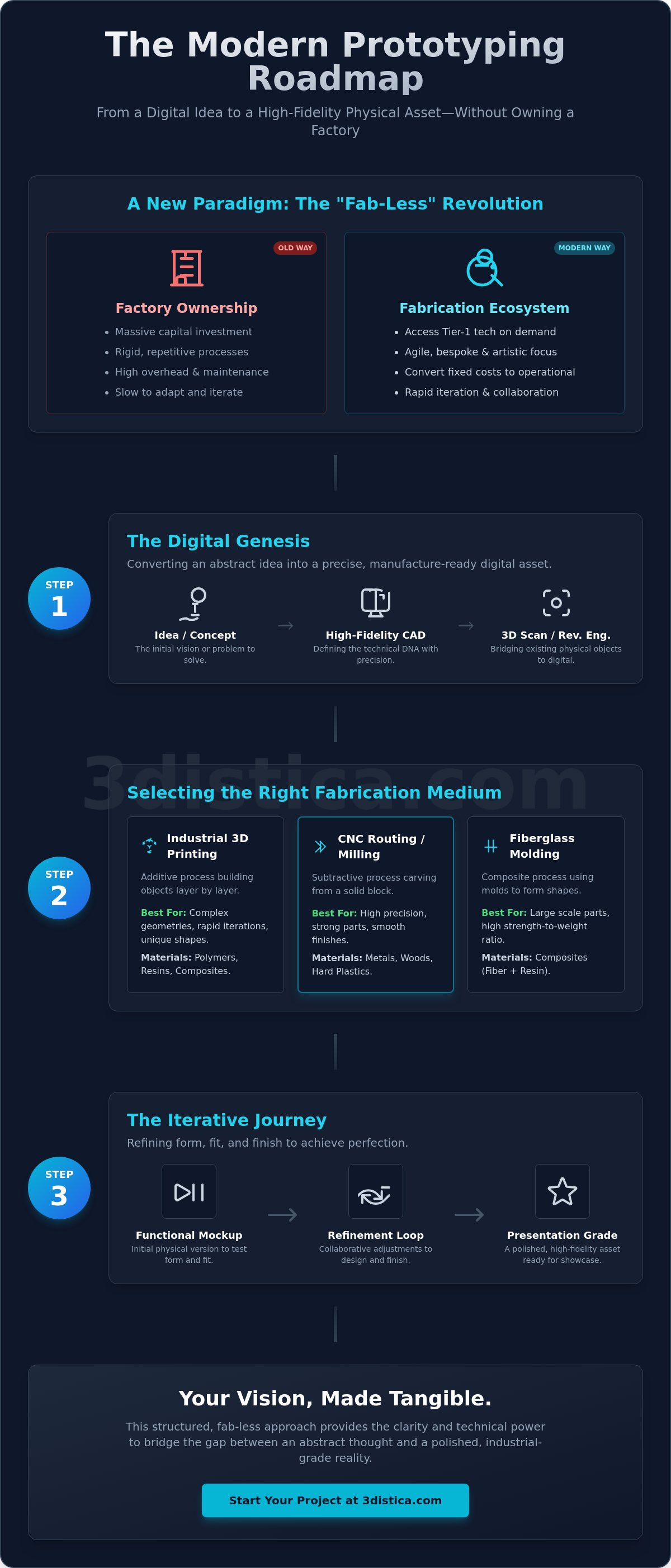
The transition from a digital file to a physical asset is a defining moment in the design process. It's where the abstract meets the elemental. Choosing the correct medium is not a mere technicality; it's a strategic decision that influences the narrative and functional success of your project. When exploring how to make a product prototype without a factory, you must weigh the speed of additive manufacturing against the structural permanence of subtractive methods. Each material carries its own weight, texture, and technical promise.
Industrial 3D printing excels in the creation of complex, internal geometries that were once considered impossible to manufacture. It provides a rapid path to high-fidelity mockups where intricate detail is paramount. Conversely, CNC routing and laser cutting offer a level of material strength and surface precision necessary for structural prototypes. For those creating monumental installations or architectural props, styrofoam sculpting serves as a powerful tool for rapid conceptualization. It allows for the exploration of volume and scale at a pace that traditional manufacturing cannot match.
Fiberglass remains the gold standard for large-scale, durable assets that require organic surface curvatures. It offers a unique combination of lightweight portability and extreme environmental resilience. This artisan-led process involves meticulous mold making and casting, ensuring that every curve captures the intended spatial feeling. Whether you're developing architectural wall cladding or bespoke public art, fiberglass provides a sophisticated finish that resists the elements while maintaining its structural integrity. It's a medium that speaks of permanence and quality, far removed from the ephemeral nature of basic, consumer-grade prints.
Achieving micron-level accuracy is essential for prototypes that must demonstrate mechanical fit and function. When you understand how to make a product prototype without a factory, you realize that CNC milling allows for the use of production-grade materials, providing a physical asset that behaves exactly like the final product. This level of precision is vital for custom RC parts or classic car restoration where tolerances are non-negotiable. Modern fabrication studios also utilize multi-material industrial 3D printing to create functional, moving-part prototypes in a single build. This capability allows you to validate complex assemblies without the need for multiple manufacturing setups, significantly reducing the complexity of the development cycle.
The journey from a digital blueprint to a physical asset is rarely a straight line. It’s a rhythmic cycle of creation, critique, and refinement. When you master how to make a product prototype without a factory, you embrace the iterative nature of design. This process begins with a functional mockup. This initial physical manifestation allows you to validate the core mechanics and spatial dimensions in the real world. It's where the theoretical meets the practical, providing the first tangible evidence of your vision's viability.
Once the physical feedback is gathered, the technical refinement phase begins. You return to the digital CAD environment to adjust tolerances and optimize geometries based on how the material behaved. This loop continues until the fit is perfect. Following this, the focus shifts to the surface finishing, where the prototype gains its visual and tactile soul. Finally, the assembly stage ensures that every bespoke component, from CNC-routed panels to 3D-printed gears, integrates with seamless precision. Each step is a deliberate movement toward perfection.
A prototype’s success often hinges on its emotional resonance. If it looks and feels like a mass-produced product, stakeholders are more likely to believe in its viability. Professional surface finishing techniques, such as hydro chroming and custom paint applications, bridge the gap between a raw build and a retail-ready asset. These artisanal methods can replicate the sheen of polished metal or the texture of high-end polymers without the need for expensive industrial tooling. For projects requiring an impeccable aesthetic, exploring bespoke surface finishing and hydro chroming ensures your vision is presented with the prestige it deserves.
One of the greatest advantages of a fab-less model is the absence of factory lag. You don't have to wait weeks for a production line to clear. Instead, you maintain a rapid feedback loop with your fabrication studio. Utilizing maquettes, or small-scale architectural models, allows you to test form and lighting at a fraction of the time and material cost. This scale-model approach is particularly effective for validating installation logistics for large-scale architectural elements or public art. It ensures that when the final, full-scale assembly occurs, every variable has been accounted for and every risk mitigated.
The journey concludes when the digital shadow finally yields to a physical presence. Learning how to make a product prototype without a factory isn't just a technical exercise; it's a strategic evolution. Once you've validated the form and fit, the path often leads toward bespoke, low-volume production. This phase allows you to move beyond the single prototype into a curated series of high-fidelity assets. Whether it’s a collection of custom awards or intricate interior panels, the focus remains on uncompromising quality rather than the dilution of mass production.
Protecting your intellectual property is a cornerstone of this professional transition. By choosing a local fabrication partner within the UAE, you ensure that your designs remain secure within a framework of mutual trust and professional accountability. This partnership transforms the prototype from a simple test piece into a powerful storytelling tool. A high-quality physical asset communicates your brand’s commitment to excellence more effectively than any digital render ever could. It’s the final word in your design narrative.
Transitioning from a solitary prototype to a limited run of custom trophies, collectibles, or architectural elements requires a nuanced understanding of material logistics. Managing the assembly and installation of monumental sculptures or large-format public art demands more than just machines; it requires an orchestration of technical expertise. 3DISTICA serves as an invisible factory for UAE innovators, providing the industrial infrastructure needed to scale your vision without the burden of facility management. This allows you to maintain the soul of a bespoke creation while meeting the demands of high-end projects.
Technical fabrication is most successful when it moves beyond a simple transaction and becomes a deep collaboration. You don't just need a vendor; you need a partner who values the artistic integrity of your work as much as the micron-level precision of the build. This visionary artisan approach ensures that every detail, from the surface finish to the structural joints, aligns with your original conceptual essence. Your next step is to move from the digital screen to the physical masterpiece. We invite you to collaborate with our team and begin the process of refining your vision into a tangible reality.
The barrier between an abstract idea and a high-fidelity physical asset has never been more permeable. By mastering how to make a product prototype without a factory, you trade the rigidity of industrial ownership for the fluid precision of a specialized partnership. You've seen how the orchestration of digital design, industrial 3D printing, and master-level fiberglass fabrication creates objects that carry the weight of your original intent. This process isn't just about technical validation; it's about crafting a narrative that commands attention and inspires confidence in your brand’s future.
3DISTICA brings specialized technical expertise to innovators across the UAE and GCC region, focusing on end-to-end bespoke production projects. Whether you're restoring a legacy component or launching a monumental public installation, the transition from digital file to tangible asset requires a meticulous hand. We invite you to collaborate with 3DISTICA to bring your vision to life through a partnership that values artistic integrity as much as technical accuracy. Your masterpiece is ready to take its shape.
No, you don't necessarily need a manufacture-ready 3D file to begin your project. A professional studio can transform your conceptual sketches or physical models into digital assets through 3D scanning and reverse engineering. This collaborative start ensures the technical DNA of your project is sound before fabrication begins. It allows the artisan to guide the digital genesis of your vision with absolute precision.
The duration of the prototyping process depends entirely on the complexity and scale of the project. A high-fidelity physical asset can take anywhere from a few days for industrial 3D printing to several weeks for intricate fiberglass molding and surface finishing. Each phase is a deliberate movement toward perfection, ensuring the final result captures the intended spatial feeling and technical accuracy.
Yes, you can successfully prototype monumental architectural elements through specialized fabrication partnerships. Techniques like large-scale styrofoam sculpting and fiberglass casting allow for the creation of massive forms without the need for traditional industrial infrastructure. This approach is ideal for validating the impact of wall cladding or public art before final installation, providing a clear roadmap from digital file to physical asset.
Fiberglass is the superior choice for prototypes destined for the challenging outdoor climate of the UAE. Its exceptional resistance to high UV levels and extreme thermal fluctuations ensures the prototype maintains its structural integrity and aesthetic finish. When considering how to make a product prototype without a factory, selecting weather-resistant materials like fiberglass or hydro-chromed resins is essential for long-term durability in the region.
Protecting your intellectual property is best achieved through legally binding non-disclosure agreements and choosing a reputable local partner. Working with a studio in the UAE provides a framework of professional accountability and legal protection that is often missing in global, mass-production environments. This proximity allows for transparent communication and secure handling of your proprietary digital assets throughout the creation process.
Neither technology is objectively better; rather, they serve different functional purposes in the prototyping journey. Industrial 3D printing is unmatched for creating intricate internal geometries and complex organic forms. CNC milling, however, provides superior material strength and micron-level precision for structural components. The choice depends on whether your priority is visual complexity or functional fit and mechanical performance.
Yes, a high-fidelity prototype often serves as the final physical asset for bespoke, low-volume projects. In the world of custom awards, trophies, or unique interior panels, the distinction between a prototype and a final product dissolves. The artisanal attention to detail and professional surface finishing ensure that the piece meets the highest standards of luxury and craftsmanship required for high-end environments.
A mockup is a preliminary tool used to validate core mechanics and dimensions, while a high-fidelity prototype is a refined representation of the final vision. Mockups focus on functional fit and are often produced quickly using basic materials. High-fidelity prototypes involve professional surface finishing and precise material selection to replicate the exact look and feel of a production-grade asset, making them essential for stakeholder presentations.
