What if the greatest threat to your monumental vision isn't the complexity of the design, but the invisible friction between a digital render and the harsh physical atmosphere of the UAE? You've likely felt the tension of watching a high-fidelity CAD model struggle against the realities of extreme UV exposure or logistical constraints in a rapidly evolving urban landscape. It's a common frustration to see a concept lose its soul when scaled to a public landmark. This guide empowers you to master large scale fabrication project planning by integrating a refined digital-to-physical framework that ensures your work survives both the elements and the scrutiny of close inspection.
We'll explore how to leverage the latest AI-powered automation and strategic material selection to maintain artistic integrity from the first industrial 3D print to the final installation. With regional material costs and environmental demands shifting in 2026, precision is no longer just an aesthetic choice; it's a structural necessity. You'll learn to navigate the complexities of oversized asset logistics and specialized finishing to ensure your work remains as durable as the narrative it represents within our unique national climate.
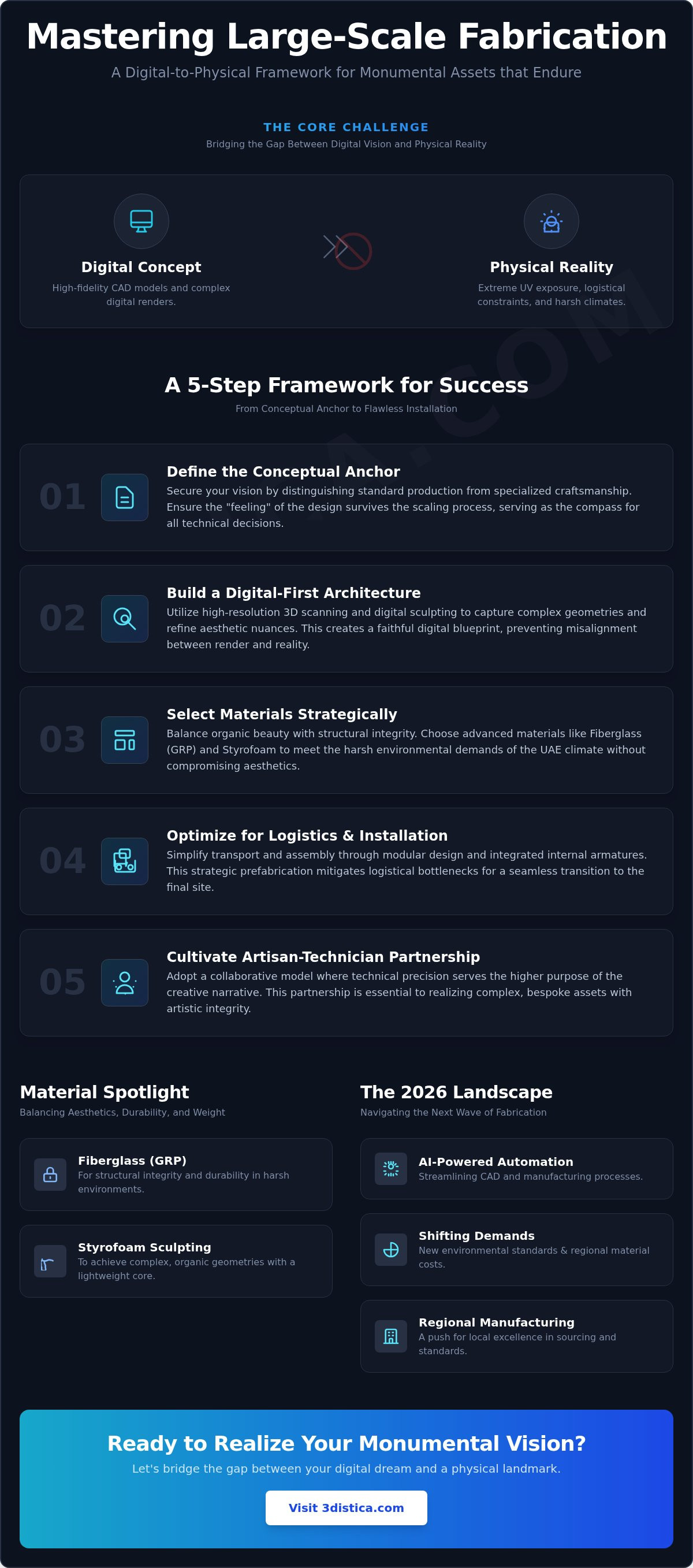
• Define the bridge between industrial manufacturing and bespoke art. Secure your vision by distinguishing standard production from the specialized craftsmanship required for monumental assets.
• Utilize 3D scanning and digital sculpting to capture complex geometries. These high-fidelity tools allow for the refinement of every aesthetic nuance before the physical transformation begins.
• Optimize your large scale fabrication project planning with advanced material strategies. Learn how Fiberglass (GRP) and Styrofoam sculpting balance organic beauty with the structural integrity needed for harsh environments.
• Simplify installation through modular design and integrated internal armatures. Strategic planning for transport and assembly mitigates logistical bottlenecks and ensures a seamless transition to the final site.
• Cultivate an artisan-technician partnership to realize complex bespoke assets. Adopting a collaborative guide model ensures that technical precision always serves the higher purpose of your creative narrative.
Effective large scale fabrication project planning begins where the blue-collar grit of the workshop meets the ethereal ambition of the studio. It's the deliberate synthesis of advanced manufacturing and artistic vision for oversized assets. While traditional industrial manufacturing often prioritizes the repetition of load-bearing components, bespoke creative fabrication focuses on preserving an aesthetic soul at an immense scale. This distinction is vital. One produces infrastructure; the other produces an experience. In this context, planning isn't merely a logistical checklist. It's the orchestration of a journey from a high-fidelity digital concept to a tangible landmark that commands its environment with authority and grace.
Narrative intent serves as the compass for every technical decision made during the initial phases. It ensures that the "feeling" of a design isn't lost when it transitions from a five-inch render to a fifty-foot installation. Success in these monumental endeavors is measured by three primary metrics: fidelity to the original vision, durability against environmental stressors, and spatial harmony within the final site. A deep understanding of prefabrication allows visionary artisans to divide these monumental visions into modular components that maintain their integrity during transport and assembly. This approach ensures that the final asset isn't just large, but also meticulously refined.
Hybrid manufacturing has redefined the boundaries of what's possible in the current landscape. The integration of industrial 3D printing with traditional manual craft allows for geometries that were once considered impossible. We've moved beyond the era of mass production into a period defined by bespoke, high-fidelity monumental assets. Today, environmental mood is a technical requirement in project briefs rather than a vague suggestion. It's a recognition that a physical asset must interact with the unique light and climate of the UAE to fulfill its purpose. This shift demands a planning framework that accounts for the interplay of elemental forces from the very first day.
Translating an abstract spatial feeling into technical fabrication requirements is a delicate art. It requires identifying the core essence of a project that must survive the scaling process. When you're planning for a monumental branding piece or a public art installation in centers like Abu Dhabi or Dubai, you're managing the tension between physical constraints and creative freedom. In 2026, the push for regional manufacturing excellence adds a layer of complexity to sourcing and material standards. Your conceptual anchor must be strong enough to withstand these shifts without losing its identity. By defining these visual forces early, you ensure the final physical reality matches the initial digital dream.
The blueprint for a monumental asset is no longer a static drawing; it's a living digital ecosystem. In the context of large scale fabrication project planning, this digital phase is where the project's soul is codified. Precision is the silent partner of creativity. By utilizing high-resolution 3D scanning and reverse engineering, we capture the intricate geometries of complex forms, ensuring that every digital point cloud serves as a faithful foundation for the physical transformation to follow. This technical rigor prevents the common heartbreak of discovering a misalignment between a digital render and the physical reality only after the materials have been cut.
Digital sculpting allows for the refinement of aesthetic nuances with a level of control that traditional manual tools cannot match. It's about moving beyond basic dimensions to capture the "feeling" of a curve or the way light interacts with a surface. These files then transition into CAD models optimized for manufacture. With the 2026 release of SOLIDWORKS, features such as AI-powered drawing automation and fastener recognition have streamlined the path from screen to shop floor. This high-fidelity approach to Digital fabrication and project development ensures that every CNC routing path and industrial 3D print layer is purposeful and precise.
The "Digital Twin" concept serves as a cornerstone of modern planning. It's a virtual replica used for exhaustive stress and fitment testing. By simulating environmental stressors before the first piece of fiberglass is cast, we eliminate the uncertainty that often plagues oversized assets. This virtual prototyping phase allows us to identify potential structural failures or logistical bottlenecks in a risk-free environment. For those seeking a visionary artisan to guide this process, the digital twin becomes the ultimate bridge between abstract thought and tangible asset.
Small-scale maquettes and architectural scale models are essential for validating spatial impact and proportions. They bridge the gap between a backlit screen and the actual environment, allowing stakeholders to experience the work's volume. Rapid prototyping further enables quick material testing and surface finish approval. This transition from a digital render to a technical manufacturing blueprint is a curated process that ensures the final monumental branding or art piece maintains its intended gravitas.
Technical precision in sculpting bridges the gap between fluid 3D design software and the rigid logic of CNC routing paths. 3D scanning provides the surgical accuracy needed for sensitive restoration projects, such as classic car parts restoration or high-stakes replica work. Digital sculpting preserves the artistic narrative during scale-up by allowing for microscopic adjustments to form and texture that maintain their visual weight even when magnified to monumental proportions. This ensures that the essence of the work remains intact, regardless of its final physical size.
While many traditionalists lean heavily on steel, modern large scale fabrication project planning recognizes that the heaviest material isn't always the most durable or expressive. Fiberglass (GRP) has emerged as the premier choice for complex, organic shapes that require both high-fidelity aesthetics and extreme weather resistance. It allows for a level of fluid storytelling that rigid metal struggles to replicate without immense weight and cost. For temporary installations or massive event props, styrofoam sculpting provides a lightweight yet structurally sound foundation that can be refined through precise CNC routing to achieve a professional, gallery-quality finish.
Industrial 3D printing further expands this palette by providing high-detail polymer components that integrate seamlessly into larger assemblies. This isn't about mass production; it's about bespoke precision for elements that require intricate textures or internal geometries. CNC milling in wood and composite panels adds another layer of versatility, allowing for wall cladding and interior panels that feel as intentional as a fine sculpture. By selecting the right material for each specific component, you ensure that the final asset is both a technical marvel and a visual masterpiece.
In harsh national climates, material choice is a technical imperative that dictates the longevity of your vision. Fiberglass offers a superior weight-to-strength ratio compared to aluminum or steel, making it ideal for large-scale art that must be suspended or installed on weight-sensitive surfaces. While metal absorbs heat and risks expansion, specialized polymers and GRP maintain their form under intense UV exposure. Sustainability is also a key driver in 2026. Your large scale fabrication project planning should account for the rising demand for low-emission composites and recycled content to meet evolving environmental standards without sacrificing the asset's structural integrity.
The final narrative impact of an asset often rests on its surface finishing. Hydro chroming and specialized automotive-grade coatings provide a transformative power, turning raw fiberglass or 3D-printed parts into high-gloss metallic masterpieces or subtle, matte textures. These finishes aren't just for show. They include vital UV inhibitors and protective layers that ensure longevity against the elements. Whether you're aiming for a natural stone mimic or a futuristic chrome, the right surface treatment anchors the asset in its intended environmental mood, ensuring it remains as striking in five years as it is on the day of installation.
The journey from a controlled studio environment to a public site is the most vulnerable phase for any monumental asset. It's here that large scale fabrication project planning must account for the physical variables of the open world. Unlike standard industrial shipping, transporting a bespoke fiberglass sculpture or a complex architectural maquette requires more than just crane capacity; it demands a curated logistics strategy that protects the narrative essence of the work. Modular design isn't just about fitting pieces onto a truck. It's about engineering invisible seams and internal armatures that provide structural integrity while allowing for a graceful reassembly on-site.
A "White-Glove" approach distinguishes high-end fabrication from general construction. It treats every component as a piece of art rather than a commodity. This means specialized handling protocols for surface finishing and hydro chroming, ensuring that the aesthetic fidelity established in the digital phase remains unblemished. Integrating internal supports requires a deep technical understanding of how different materials, like styrofoam and fiberglass, interact under stress. If your project involves intricate wall cladding or interior panels, the planning phase must ensure these elements align perfectly during the final installation.
Successful delivery follows a meticulous three-step sequence that begins long before the first module leaves the shop floor:
Assessing transport routes and access points for modular components. This includes identifying low-clearance bridges or tight urban corners that could compromise oversized loads.
Implementing specialized handling protocols for delicate surface finishes. We use custom crating and soft-touch rigging to prevent abrasions on polished or textured surfaces.
On-site assembly and seamless joint integration. Technicians use precision alignment tools to ensure that the transitions between modules are invisible to the naked eye.
Environmental stressors in 2026, particularly extreme UV and heat, require proactive engineering. Effective large scale fabrication project planning accounts for thermal expansion in high-temperature regions where different materials might expand at varied rates. Wind load considerations are equally vital for outdoor sculptures, necessitating structural calculations that account for the total surface area and wind resistance of the asset. Long-term visual fidelity depends on a steady maintenance schedule. This ensures that protective coatings continue to shield the work from the elements, preserving the emotional impact of the design for decades to come.
A monumental vision requires more than just a manufacturer. It demands a visionary artisan. In the final stages of large scale fabrication project planning, the relationship between the creator and the fabricator shifts from a simple contract to a deep, collaborative partnership. While a traditional vendor might focus solely on the output of a machine, a collaborative guide remains anchored in the project's core narrative. This model ensures that the technical precision of the workshop never overshadows the artistic essence of the work. It's about trust. You need a partner who speaks the language of spatial feeling as fluently as they speak the language of tolerances and load paths.
The 3DISTICA methodology is built upon this intersection of high-fidelity technology and master craftsmanship. By merging technical precision with visionary artistry, we ensure that every asset is a bespoke reflection of the client's original intent. This end-to-end support covers every phase of the journey. We guide you from the initial digital sculpting through the complexities of material selection and into the final national installation. This comprehensive oversight positions your project for exclusivity, ensuring that the final result isn't just a physical object, but a significant cultural or branding landmark.
Industrial 3D printing is a powerful tool, but it's only one part of the story. In a high-end creative partnership, technology serves the narrative rather than dictating it. Machine-made components provide the structural foundation, yet it's the role of manual craftsmanship to refine these elements. Hand-finishing, delicate assembly, and the application of custom surface treatments give the work its final, immersive quality. This synergy between the digital and the tactile is what makes an asset future-ready. It ensures the piece can withstand the scrutiny of a gallery while maintaining the durability required for a public square.
The success of a large-scale project often depends on the clarity of the initial brief. When briefing a fabrication partner, start by defining the emotional impact you want to achieve. Don't just list dimensions; describe the environment and the intended mood. Effective large scale fabrication project planning involves setting milestones that prioritize both the timeline and artistic integrity. These milestones should include digital sign-offs, material prototypes, and logistical dry runs. If you're ready to transform an ambitious concept into a tangible reality, invite collaboration on your next monumental vision with 3DISTICA. Together, we'll navigate the complexities of creation with elegance and authority.
Transforming a monumental concept into a physical landmark is a journey of meticulous refinement. It requires a seamless transition from digital high-fidelity to master craftsmanship. You've explored how strategic material choice and modular logistics protect the soul of a design against the elements. Integrating these sophisticated layers into your large scale fabrication project planning ensures that the final asset stands as a lasting testament to both technical precision and artistic narrative. Precision isn't just a metric; it's the guardian of your creative intent.
Realizing such ambitious work demands a partner who understands the interplay of elemental visual forces. 3DISTICA provides a visionary artisan approach, blending industrial 3D printing and fiberglass expertise with the nuanced touch of manual craft. We offer national coverage for complex installations, ensuring that your spatial feeling is preserved from the first scan to the final assembly. Begin your bespoke fabrication journey with the artisans at 3DISTICA. Your most ambitious vision is ready to become a tangible reality that inspires wonder and commands presence.
Planning for extreme climates requires a deep analysis of thermal expansion and UV degradation. Materials like fiberglass are chosen for their stability in high-heat environments. We integrate structural armatures that allow for movement without compromising the asset's skin. This technical foresight ensures the narrative remains intact despite environmental stressors that could otherwise cause material failure.
Fiberglass (GRP) is the premier choice for large outdoor sculptures in the UAE due to its exceptional heat and UV resistance. Unlike metal, which can become dangerously hot and expand significantly, fiberglass maintains its form and surface finish in desert conditions. It allows for complex, organic shapes that resist the abrasive effects of sand and high humidity over long durations.
Industrial 3D printing integrates with traditional fabrication by producing high-detail components that are then merged with larger hand-crafted structures. This hybrid approach allows us to achieve intricate textures that would be impossible with manual tools alone. It's a vital part of large scale fabrication project planning where digital precision meets the physical gravitas of monumental scale.
The timeline for a bespoke monumental art installation typically ranges from several months to over a year, depending on complexity. Initial digital sculpting and prototyping may take eight to twelve weeks. Fabrication and surface finishing follow; the final duration is dictated by the scale of the modular components and the specific requirements of the national installation site.
Yes, fiberglass fabrication is an excellent medium for architectural wall cladding and interior panels. It offers a lightweight alternative to stone or metal while providing limitless possibilities for custom textures and geometries. Its weather-resistant properties make it ideal for exterior facades that require a specific environmental mood or a sophisticated branding identity that survives the elements.
We ensure digital designs match the final product through the use of "Digital Twins" and high-resolution 3D scanning. By creating a virtual replica, we can perform stress and fitment tests before production begins. This rigorous technical workflow guarantees that every curve and silhouette captured in the CAD software is faithfully translated into the high-fidelity physical asset.
Modular fabrication reduces the logistical risks associated with oversized structures by allowing for off-site production in controlled environments. This approach simplifies transport and enables faster, more predictable on-site assembly. It also allows for individual components to be finished with specialized coatings, such as hydro chroming, before being joined into a single, seamless monumental asset.
Handling the logistics of oversized assets involves meticulous route planning and specialized handling protocols. Successful large scale fabrication project planning identifies potential bottlenecks, such as low-clearance bridges, early in the process. We use custom rigging and protective crating to ensure that delicate surface finishes remain unblemished during transport to the final destination.
