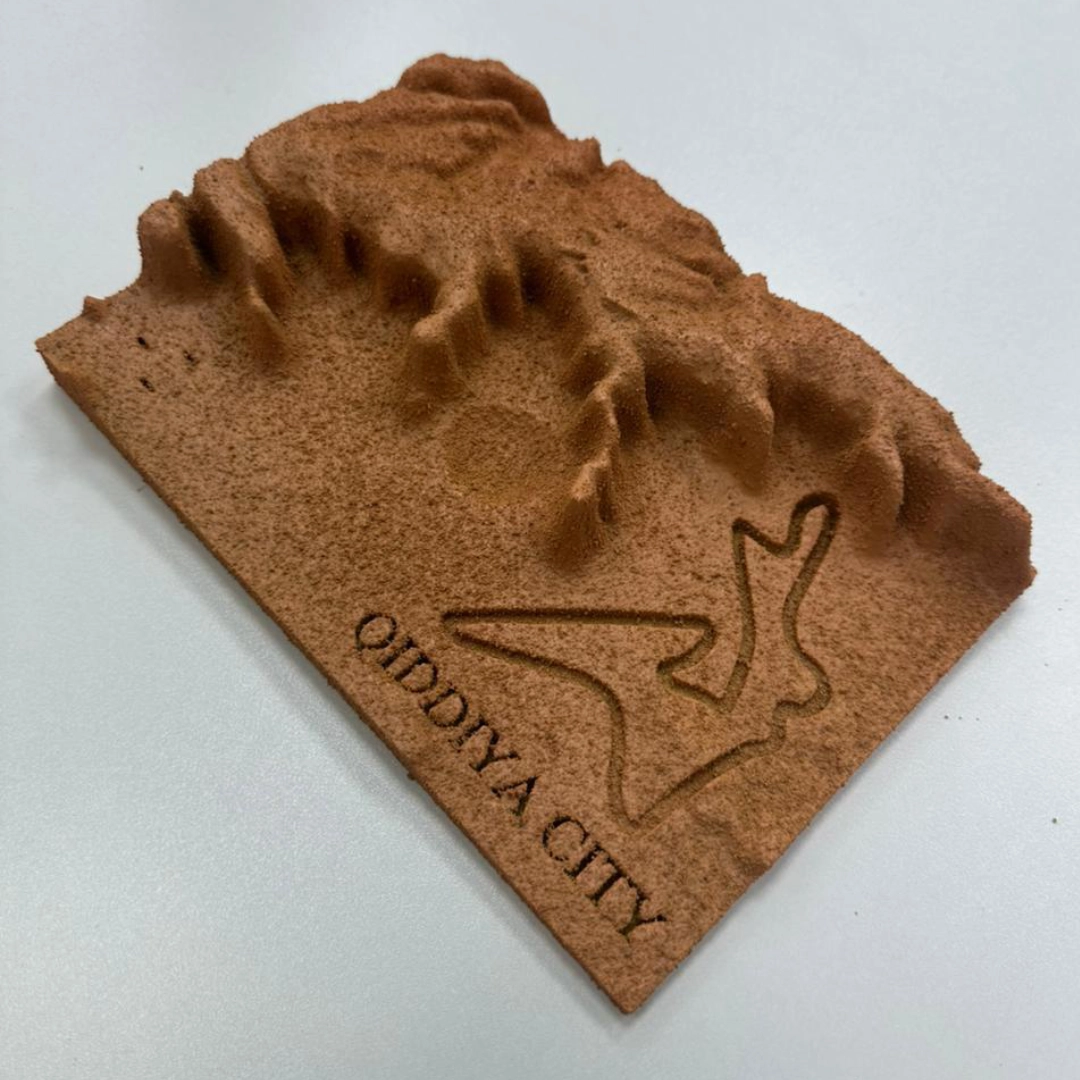
Can a digital render truly capture the weight of a shadow or the quiet elegance of a physical threshold? While pixels offer flexibility, they often fail to bridge the emotional gap between a conceptual sketch and a high-stakes investment. You've likely noticed how investors lean in when a physical model is unveiled. It's because a maquette provides a sense of certainty that 2D images cannot replicate. Mastering how to present an architectural model to investors isn't just about showing a miniature building; it's about inviting them to inhabit your vision before the first stone is laid.
We understand the frustration of watching a brilliant spatial flow get lost in translation during a presentation. This guide will teach you how to use physical scale models to build undeniable trust and communicate complex spatial narratives with clarity. We'll examine the strategies for handling technical scrutiny and using tangible assets to justify project costs in an era of rising material volatility. By the end, you'll have a sophisticated framework for turning your next pitch into an immersive, persuasive experience that leaves no room for doubt.
At a Glance: Mastering the Tangible Pitch
Learn why physical models cultivate a unique sense of tactile trust that helps investors overcome the fatigue of digital visualizations.
Discover how to present an architectural model to investors by identifying "hero features" that physically demonstrate your project's potential ROI.
Understand when to utilize monochromatic massing models for conceptual buy-in versus high-fidelity sectionals for showcasing luxury interior finishes.
Gain insights into setting the stage with optimal lighting and 360-degree accessibility to make your spatial narrative feel intuitive and lived-in.
Explore how precision in model fabrication, using industrial-grade materials like fiberglass and CNC-milled resins, reflects your commitment to project excellence.
Digital screens create distance. A physical architectural model creates presence. In a market saturated with high-fidelity renders, investors often experience a subtle skepticism known as render fatigue. They've seen countless idealized images that don't always account for the friction of reality. A physical maquette cuts through this noise. It offers a sense of tactile trust, reducing the perceived risk of an investment by providing a tangible asset that can be examined from every angle. When you master how to present an architectural model to investors, you're not just showing a building; you're proving its existence.
Spatial cognition is the silent driver of a successful pitch. Human brains process 3D volume significantly faster than 2D screen projections. While a slide deck disappears the moment the projector shuts off, the model remains a permanent anchor in the room. It stays on the table during the Q&A session, acting as a constant reference point that grounds abstract financial discussions in physical reality. It's a silent witness to the project’s feasibility and a testament to your meticulous planning.
Physical objects trigger a powerful psychological response known as the endowment effect. When stakeholders stand around a bespoke model, they begin to feel a sense of psychological ownership that digital files simply cannot evoke. This transition from "your project" to "our project" is vital for securing high-stakes buy-in. The meticulous choice of materials, from CNC-milled resins to fiberglass finishes, signals a level of project maturity. It demonstrates that you've moved beyond conceptual sketches into the rigorous process of technical refinement.
Financiers are rarely structural engineers. A complex cantilever or a revolutionary facade system can be difficult to justify through technical drawings alone. A physical model translates these complexities into an intuitive narrative. It allows multiple decision-makers to reach a consensus simultaneously because they're looking at the same objective reality. The model effectively:
by showing how forces and volumes interact.
by placing the design within its urban context.
regarding material transitions and spatial flow.
This shared understanding is the foundation of trust. It ensures that every person in the room, regardless of their technical background, leaves with the same clear vision of the project's success.A model is a silent orator. It speaks of potential, longevity, and fiscal promise. To master how to present an architectural model to investors, you must view the maquette as a physical stage for your financial argument. It's not enough to show a building; you must show a return on investment. Every element, from the sweep of a driveway to the texture of a facade, should reinforce your core investment thesis. Investors don't just buy square footage. They buy a narrative of growth and a vision of future success.
Begin by identifying your hero feature. This is the specific architectural element that proves the project's viability. If you're pitching a mixed-use development in the UAE, your model should emphasize the seamless integration into the existing urban fabric. Use context models to show how your design breathes within the skyline, proving that it isn't an isolated structure but a vital organ of the city. While your architecture presentation boards provide the data, the model provides the soul. A well-crafted architectural scale model serves as the physical anchor for this story, turning abstract numbers into a lived experience.
Precision in a model reflects precision in management. Focus the viewer’s attention on high-yield areas, such as premium retail zones or luxury amenities, by using internal lighting to draw the eye. You can use programmable LEDs to demonstrate phase-wise development, showing how the project evolves over time. The baseplate shouldn't be an afterthought; use it to demonstrate site accessibility and logistical efficiency. Showing a clear path for traffic flow and pedestrian access addresses technical concerns before they're even voiced.
Atmosphere is the bridge between logic and desire. Incorporating "life" elements like meticulously scaled people, greenery, and vehicles transforms a sterile object into a vibrant destination. Use varied material textures to suggest luxury or sustainability. A matte, stone-like finish might suggest timeless strength, while high-gloss elements can signify modern innovation. This level of detail aligns the model’s aesthetic with the developer’s brand identity, ensuring that the physical asset feels like a bespoke creation rather than a mass-produced replica. By guiding the investor’s eye through a curated spatial journey, you turn a technical review into a moment of wonder.
Choosing the right level of detail is a strategic maneuver. It requires a deep understanding of where your project sits in its funding lifecycle. If you're in the nascent stages of a pitch, a hyper-realistic model might actually hinder progress by inviting premature critiques of color or texture. Conversely, a simple massing study won't suffice when you're asking for the final signature on a multi-million dollar development. Mastering how to present an architectural model to investors means matching the model's fidelity to the investor’s current psychological state.
Monochromatic "white models" strip away the noise of materiality. By focusing on pure form and volume, these maquettes allow the core architectural intent to shine through without the distraction of color. This architectural purity is essential during early-stage feasibility discussions. By removing unnecessary aesthetic choices, you help clients overcome decision fatigue by narrowing their focus to the core spatial concept. It creates a sense of timelessness. It suggests that the design is robust enough to stand on its own without the crutch of decorative finishes.
When the goal is to close a final investment round, hyper-realism becomes your most potent tool. High-fidelity prototypes utilize advanced surface finishing and integrated LED systems to simulate day and night cycles. This isn't just about aesthetics; it's about proof of concept. Seeing the warm glow of an interior sectional or the reflection of light off a fiberglass facade makes the project feel inevitable. It elevates the perceived value of the development by demonstrating a commitment to high-end craftsmanship and technical precision.
Site models serve a distinct purpose by contextualizing the project within the broader landscape. They show how the structure interacts with its surroundings, whether it's a coastal expanse or a dense urban corridor. For luxury residential pitches, detailed sectionals are often the deciding factor. They allow investors to peer into the private life of the building, showcasing interior finishes and premium amenities. The choice of fabrication method reflects the technical precision of the project itself. Whether you're utilizing industrial 3D printing for complex, organic geometries or fiberglass products for structural durability, each material choice is a signal of your project's sophistication. Understanding how to present an architectural model to investors involves selecting the right scale and material to highlight these unique selling points.
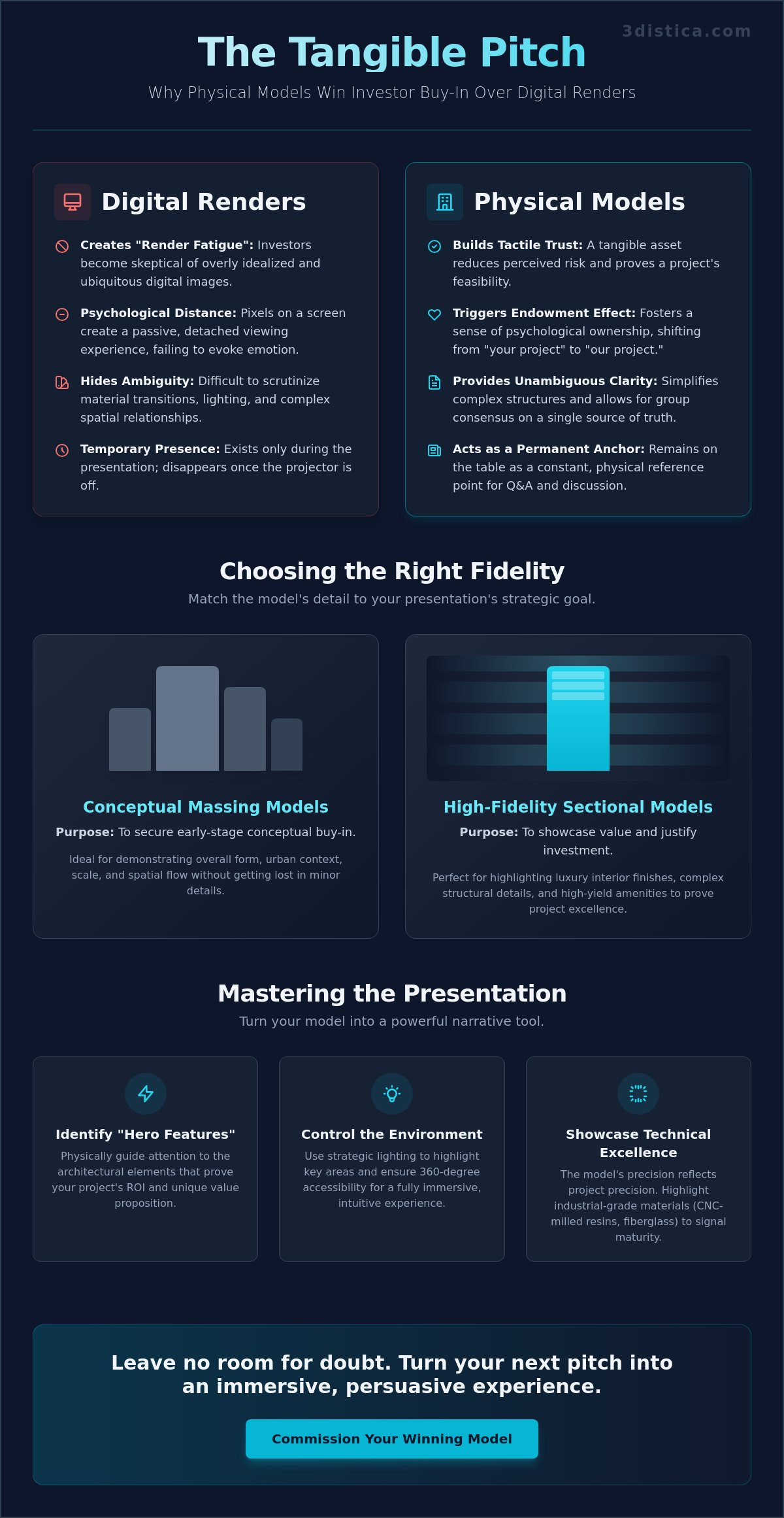
The live presentation is a choreographed performance where technical precision meets theatrical flair. To master how to present an architectural model to investors, you must view the physical space as an extension of the design itself. A model tucked in a corner loses its power; it must be the centerpiece. Ensure the table height allows for a comfortable, slightly elevated gaze, and provide 360-degree accessibility so stakeholders can explore the spatial flow from every orientation. This freedom of movement mirrors the freedom of thought you want to encourage in your partners.
Lighting is your most subtle yet effective tool. Harsh overhead fluorescent lights can flatten intricate details or create distracting shadows. Instead, use soft, directional spotlights to accentuate the textures of your architectural scale models, highlighting the interplay of light and shadow that defines the building's soul. If your model features integrated LEDs, use them to simulate day and night cycles, proving the design’s aesthetic appeal across all hours. This level of environmental control reinforces the "Visionary Artisan" persona, signaling that you've considered every facet of the project’s existence.
We're moving beyond the era of static displays. The most persuasive pitches now utilize a hybrid approach that bridges the gap between physical substance and digital data. By placing discrete QR codes on the model base, you can trigger 360-degree virtual tours on an investor’s tablet, allowing them to "step inside" the very structure they're touching. Augmented Reality (AR) overlays take this further. You can project live traffic flows, sun path trajectories, or environmental impact data directly onto the physical maquette. This layering of information transforms the model into a dynamic data visualization tool, answering complex technical questions through immersive visuals.
Controlled interaction builds a unique bond between the investor and the project. Don't be afraid to let them touch the model. High-quality materials like fiberglass and CNC-milled resins are durable enough to withstand tactile exploration. Use removable parts to reveal interior layouts, modular construction phases, or premium amenity floors. This "unboxing" moment creates a sense of discovery and transparency. It proves that the project isn't just a facade; it's a fully realized, three-dimensional reality. To ensure this reliability, always invest in a professional, custom-fitted transport case. A pristine model on arrival speaks volumes about your project management standards before you even speak a word.
Investors view the geometric precision of your scale model as a direct proxy for your project management capabilities. A flaw in the physical representation suggests a potential flaw in the eventual execution. When you master how to present an architectural model to investors, you realize that the object on the table is a testament to your professional standards. High-fidelity fabrication isn't merely an aesthetic choice; it's a strategic demonstration of reliability. It proves that your vision is backed by the technical rigour required to bring it to life.
Durability is equally vital for assets that must endure multiple funding rounds and international travel. We utilize industrial-grade materials, such as fiberglass products and CNC-milled resins, to ensure that every edge remains sharp and every surface stays pristine. For projects situated in complex urban environments or rugged landscapes, 3D scanning and reverse engineering allow us to recreate site topography with absolute accuracy. This technical foundation ensures your design is contextualized perfectly, removing any doubt about how the structure interacts with its physical surroundings.
At 3DISTICA, we view the fabrication process as a curated journey from conceptual art to technical reality. Our end-to-end workflow ensures that the nuanced details of your design aren't lost in translation. By leveraging large-scale industrial 3D printing, we can produce complex, organic geometries that traditional methods might struggle to replicate. This speed and precision allow for rapid prototyping without sacrificing quality. Our artisans then apply bespoke surface finishing to achieve the exact spatial feeling your investors expect, whether that’s the cool touch of polished stone or the warmth of a sun-drenched facade.
The most successful presentations are the result of early and steady collaboration. We work closely with architects and developers across the UAE to refine their visual messaging, ensuring that each model serves its specific narrative purpose. This early involvement allows us to optimize the design for durability and transport, providing custom-fitted cases that guarantee on-site reliability. We don't just build models; we act as a collaborative guide to help you navigate the complexities of visual communication. Elevate your next investor pitch with a bespoke 3DISTICA scale model. By bridging the gap between an abstract idea and a tangible reality, we ensure your project speaks with a voice of quiet, sophisticated authority.
A physical model is more than a miniature representation; it's a vehicle for trust and a catalyst for decisive action. By aligning your model's fidelity with your specific funding stage and mastering the nuances of environmental presentation, you create a space where stakeholders feel the weight of your vision. Understanding how to present an architectural model to investors transforms a technical review into a moment of shared discovery, bridging the gap between abstract capital and concrete reality. It turns a proposal into a promise.
Precision in these moments is non-negotiable. At 3DISTICA, we specialize in crafting high-fidelity architectural maquettes that serve as the silent anchors of your pitch. Our team provides end-to-end support, moving from CAD modeling to final installation with meticulous care. By utilizing industrial-grade 3D printing and CNC precision, we ensure that every detail reflects the technical excellence of your project management. We invite you to partner with 3DISTICA for your next landmark presentation and turn your conceptual art into a persuasive physical asset. Your vision deserves a stage that is as refined and deliberate as the design itself.
The optimal scale depends entirely on the narrative focus of your presentation. For large-scale urban masterplans, a scale of 1:500 or 1:1000 is standard to show context and integration. Individual buildings are best represented at 1:100 or 1:50 to capture specific architectural nuances. If you're highlighting luxury interior finishes or premium amenity zones, a 1:20 sectional provides the necessary immersion to justify high-stakes investment.
Monochromatic models are ideal for early-stage conceptual buy-in because they focus the investor’s attention on pure form and volume. This reduces distractions from color or material choices that may still be in flux. Transition to full-color, high-fidelity models for final funding rounds. These realistic representations simulate the finished environment, helping stakeholders visualize the specific lifestyle and atmosphere of the completed development.
Fabrication timelines typically range from two to six weeks depending on the complexity and scale of the project. A simple massing study might be completed in ten business days, while a high-fidelity commercial display model with integrated lighting systems requires a more extended period for precision finishing. Early collaboration ensures that the model is ready for your presentation without compromising on the meticulous craftsmanship required for persuasion.
Physical models serve as an excellent anchor for augmented reality (AR) overlays. By placing discrete digital markers on the model base, you can project live data, traffic flows, or 360-degree virtual tours onto the physical structure. This hybrid approach allows you to demonstrate how to present an architectural model to investors using a blend of tactile certainty and dynamic digital insights that answer complex technical questions.
Fiberglass products and CNC-milled resins offer the highest level of durability for models transported between offices and sales galleries. These industrial-grade materials resist the warping effects of environmental fluctuations while maintaining sharp geometric edges. We always recommend using custom-fitted, shock-absorbent flight cases to protect the delicate features of the model during transit, ensuring it arrives in pristine condition for the pitch.
A conceptual maquette should prioritize the primary architectural gesture and the relationship between volumes over intricate surface details. Focus on the "hero features" that prove the project's feasibility and unique value proposition. Including excessive detail at this stage can lead to decision fatigue. Instead, use the model to establish a clear spatial narrative that grounds the abstract financial discussion in a physical, understandable reality.
Physical models offer a shared experience that VR walkthroughs cannot replicate. Multiple decision-makers can examine a physical model simultaneously, facilitating immediate consensus and collaborative dialogue. Unlike VR, which can sometimes cause motion sickness or a sense of digital isolation, a physical asset provides a tangible sense of certainty. It acts as a permanent anchor in the room, maintaining its persuasive presence throughout the entire Q&A session.
Maintaining a model’s pristine appearance requires a protective acrylic cover to prevent dust accumulation and accidental damage. Use a soft, non-abrasive microfiber cloth and specialized cleaning solutions for resin or fiberglass surfaces to avoid scratching the finish. For models with integrated electronics, ensure the power systems are checked periodically. Proper care ensures the asset continues to serve as a persuasive marketing tool throughout the project's lifecycle.
