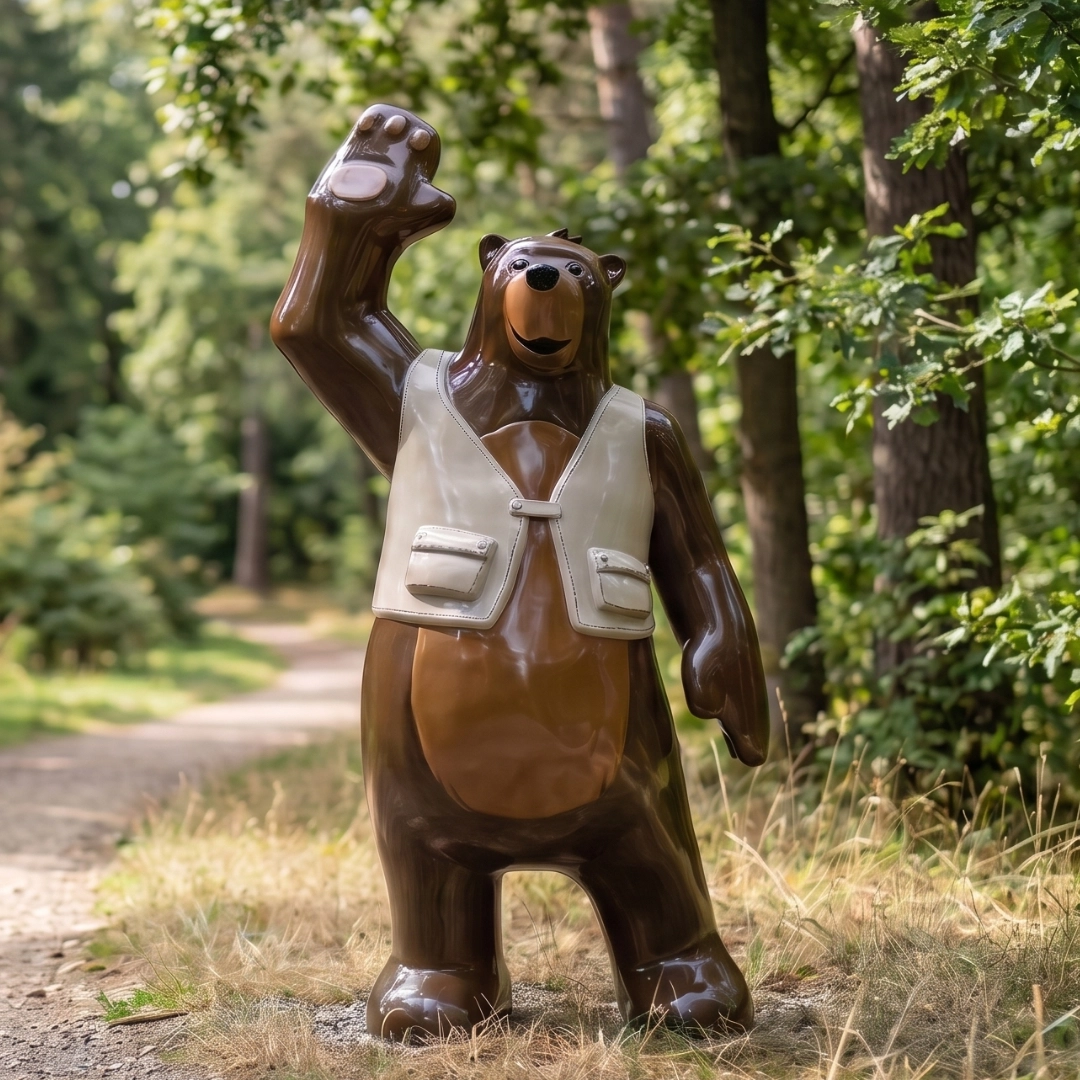
A monumental sculpture is not merely an object; it's a permanent dialogue between human vision and the raw forces of the natural world. You recognize that moving from a hand-held model to a public landmark requires more than just a creative spark. It demands a rigorous mastery of physics and material science. Whether you're concerned about structural failure in high winds or the way extreme UV exposure degrades surfaces, the transition to large-scale work is often a daunting leap. This guide provides a definitive roadmap for how to make large outdoor sculptures that command attention while resisting the elements.
You'll discover the professional techniques required to transform artistic concepts into durable, monumental masterpieces. We will examine the sophisticated workflow of digital-to-physical fabrication, the specific advantages of materials like fiberglass, and the engineering requirements that ensure your vision stands firm. With the global sculpture market projected to reach $43.0 billion by 2026, the opportunity to define unbuilt environments has never been more significant. We'll explore the intersection of architectural precision and cinematic storytelling to bring your largest ideas to life with absolute confidence and aesthetic precision.
• Master the art of conceptualizing at scale by integrating your vision into an architectural narrative that respects both weight and visual perspective.
• Explore professional techniques for how to make large outdoor sculptures using fiberglass and industrial foams to achieve a bespoke, museum-quality finish.
• Navigate the transition from digital sculpting to physical form with a streamlined fabrication process involving CNC milling and technical CAD modeling.
• Gain confidence in structural engineering by learning to design internal steel armatures that resist significant wind loads and environmental stressors.
• Identify the strategic advantages of collaborating with a fabrication partner to manage the intricate journey from initial prototyping to final installation.
Scale is a transformation of presence. When you consider how to make large outdoor sculptures, you're not simply enlarging a shape; you're altering how it interacts with gravity, light, and the surrounding architecture. A monumental sculpture demands a shift from purely aesthetic intuition to a rigorous architectural narrative. It must speak to its surroundings while surviving them. Professional fabrication begins with an environmental analysis that precedes the first cut of material. With the global sculpture market projected to reach US$ 43.0 billion by 2026, the demand for high-end, durable public art has intensified. Every design choice must now balance artistic integrity with the technical realities of physics.
The site dictates the soul of the piece. You must analyze regional UV exposure and thermal expansion, especially in climates where temperature swings can cause surface cracking in rigid materials. Wind resistance isn't just about stability; it's about the sculpture's aerodynamic profile. High-velocity winds can turn a beautiful curve into a dangerous sail. We evaluate the installation site for specific weight-bearing requirements, ensuring the foundation supports the massive load of industrial materials. This technical rigor prevents the structural failure often seen in projects that ignore local zoning and safety regulations.
The journey from a hand-sculpted maquette to a digital twin is where nuance meets precision. We use high-resolution 3D scanning to digitize every thumbprint and texture, capturing the essence of the original work. This digital model allows us to scale the work to monumental sizes while identifying structural weak points before fabrication begins. By refining the unbuilt environment through high-end architectural visualization, we bridge the gap between abstract thought and tangible reality. This process ensures that the finished work retains the artistic integrity of the original model while meeting the exacting standards of modern developers and city planners. It's a collaborative dance between the artist's hand and the precision of the machine.
Selecting the right medium is a technical imperative that defines the longevity of a public landmark. While hobbyist tutorials often suggest fragile alternatives like "paper-crete" or basic concrete, professional large-scale fabrication requires materials that endure decades of environmental stress without losing their soul. When you analyze how to make large outdoor sculptures, you quickly realize that weight and durability are the primary constraints. Industrial-grade composites and high-density foams provide the structural foundation for works that maintain their aesthetic precision through every season.
Fiberglass, or Glass Reinforced Plastic (GRP), remains the premier choice for bespoke, large-format art. It offers an exceptional strength-to-weight ratio; this allows for massive volumes that don't overwhelm their foundations. The process involves meticulous mold making and casting, which enables the replication of complex forms with high fidelity. You can achieve finishes ranging from organic, matte textures to photorealistic, high-gloss surfaces that capture the poetry of light and shadow. If you're looking to elevate your next project, our team can help you visualize these material possibilities with cinematic clarity.
Beyond standard resins, modern fabrication utilizes carbon fiber and specialized additives for extreme environments. These materials offer unmatched rigidity in high-wind zones where traditional materials might fail. Safety is equally paramount in public spaces. We integrate fire-retardant additives into the resin matrix to meet strict building codes and municipal regulations. While traditional bronze casting remains prestigious, industrial 3D printing and composite layering offer a faster, more versatile path to realizing the unbuilt without sacrificing the nuance of the design.
The internal architecture is just as vital as the visible surface. Every monumental piece relies on a metal armature, usually constructed from steel or aluminum, to act as a hidden skeleton. This frame connects the sculpture to its base and manages the stresses of wind and thermal expansion. For the outer form, we often use CNC-milled high-density foams like Polyurethane or Expanded Polystyrene (EPS). Polyurethane is preferred for its chemical resistance and crisp edges, while EPS serves as an efficient, lightweight core for larger volumes that require significant mass without the associated weight of solid casting.
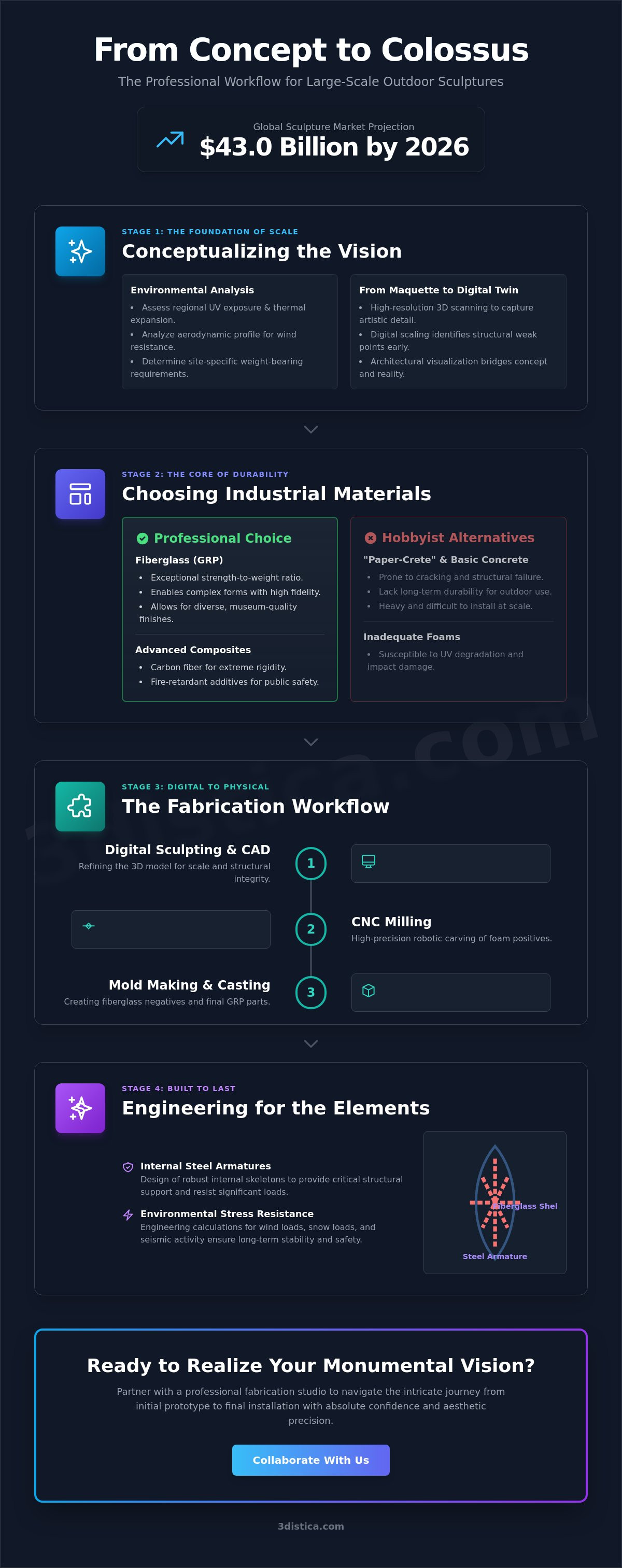
The leap from a conceptual model to a finished landmark is bridged by a sophisticated digital-to-physical workflow. While amateur methods often rely on manual layering and hand-carving that lack structural consistency, professional studios utilize mathematical certainty. Understanding how to make large outdoor sculptures at a monumental scale means embracing 5-axis CNC technology and technical CAD modeling. This process ensures that the unbuilt vision is translated into manufacture-ready files without losing a single nuance of the original design. It's a journey where bits and blades collaborate to manifest atmosphere and form.
Precision is the foundation of every monumental piece. We utilize 5-axis CNC routing to carve massive forms from industrial block materials with absolute mathematical accuracy. This technology offers a significant speed advantage, reducing fabrication timelines by 65% compared to traditional manual carving. The machine follows the digital twin with sub-millimeter precision, ensuring that the physical object perfectly mirrors the architectural narrative established in the design phase. Once the mill completes its pass, the surface is meticulously prepared for the fiberglass lamination process, creating a robust mechanical bond that will support the final aesthetic finish.
Intricate geometric designs often exceed the reach of traditional milling tools. In these instances, we integrate industrial 3D printed components into the larger CNC-milled structures. This hybrid approach allows for a level of detail that feels both photorealistic and immersive. We select advanced filaments, such as carbon-filled polymers or high-temp resins, to ensure these detailed elements possess the same durability as the primary structure. The transition between machine precision and hand-finishing is seamless; it's a curated evolution where technology handles the volume and the artisan provides the soul.
The final stage belongs to the human hand. Skilled artisans refine every surface, removing tool marks and applying specialized coatings that enhance the poetry of light and shadow. This manual refinement is what transforms an industrial object into a bespoke work of art. We don't just sand surfaces; we sculpt the atmosphere. Every curve is evaluated for its emotional impact, ensuring the finished sculpture stands as a testament to both technical mastery and visionary storytelling. By the time the piece is ready for installation, it has been refined through a process that balances the cold precision of the machine with the warm intuition of the craftsman.
Engineering is the silent partner of artistry. While the visual form captures the imagination, the internal structure ensures the work survives the relentless physics of the natural world. Mastering how to make large outdoor sculptures requires an intimate understanding of environmental stresses that go far beyond aesthetic choice. A monumental piece must act as a stable architectural element, resisting wind loads that can exceed 150 km/h in coastal regions. Without rigorous structural calculation, even the most beautiful design risks becoming a liability. We treat every installation as a permanent dialogue between the vision and the site's unique climate profile.
The soul of a monumental sculpture is its hidden skeleton. We design internal steel armatures using finite element analysis to calculate the center of gravity, especially for dynamic or unbalanced poses that challenge traditional stability. These armatures are typically constructed from high-strength galvanized steel or aluminum to prevent internal oxidation. Every weld follows strict industrial standards to ensure the frame can manage the leverage exerted by high winds. To secure the work, we integrate heavy-duty mounting plates that anchor directly into a reinforced concrete plinth or foundation, ensuring the sculpture remains a permanent fixture of the landscape. If you're planning a complex installation, our engineering team can guide you through the structural requirements of your specific site.
The exterior surface is the first line of defense against material degradation. We utilize automotive-grade paints and specialized clear coats that provide up to 99% UV protection, preventing the fading and brittleness common in lesser materials. Thermal expansion is another critical factor; materials must "breathe" as temperatures fluctuate, or they will inevitably crack. We mitigate this by using flexible resin matrices and expansion joints hidden within the design's natural contours. For those seeking a specific aesthetic narrative, we offer advanced textures such as metallic hydro-chroming or matte architectural finishes that mimic stone or oxidized metal.
Surface finishing is the final barrier between art and the elements. This technical layer doesn't just provide color; it seals the composite structure from moisture and chemical abrasion. In urban environments, where pollution and salt spray are prevalent, these coatings are essential for maintaining the sculpture's aesthetic precision over decades. Logistics also play a vital role in this phase. We often fabricate monumental works in modular components, allowing for easier transport and precise on-site assembly. This ensures that the final installation process is as seamless and professional as the initial digital design, resulting in a breathtaking landmark that stands the test of time.
Creation is an intimate act. When you scale that intimacy to a public landmark, the technical burden shifts from the artist's studio to the industrial floor. Mastering how to make large outdoor sculptures is a journey of trust; it requires a partner who values the artistic narrative as much as the structural engineering. A visionary artisan studio doesn't just manufacture; they curate the transition from the unbuilt to the tangible. This collaboration allows architects and artists to focus on the emotional impact while the technician handles the complexities of material science and environmental resistance.
A professional partner preserves the soul of the original design through high-fidelity technology. With the global art and sculpture market projected to reach US$ 43.0 billion by 2026, the demand for precision in public art has never been higher. By aligning with a fabrication expert, you ensure that the nuance of your hand-sculpted maquette isn't lost during the transition to industrial-grade fiberglass or steel. It's a process of refinement that bridges the gap between an abstract idea and a breathtaking visual reality.
Precision begins with a technical review of your CAD files. We analyze every manufacture-ready file for structural feasibility, ensuring the design can withstand the physical stresses discussed in previous sections. Prototyping is essential; we create physical mockups to test how the poetry of light and shadow interacts with the sculpture's surface in real-world conditions. This stage allows us to establish a meticulous timeline for complex projects, ensuring that every milestone is met with aesthetic precision and technical reliability.
The journey concludes with the logistics of the monumental. Managing the transport of over-sized physical assets requires specialized equipment and a deep understanding of modular assembly. On-site technical setup involves more than just placement; it requires safety certifications and coordination with local zoning authorities to ensure the work is a permanent, secure fixture of the community. We handle the complexities of the site so you can witness the final reveal of your vision. We invite you to collaborate with 3DISTICA to bring your monumental vision to life and transform the unbuilt into a lasting legacy.
The journey from an abstract concept to a permanent public landmark is a rigorous evolution of both art and industry. You've seen how the foundation of scale rests on environmental analysis and how industrial composites like fiberglass provide the durability required for the open air. By integrating 5-axis CNC milling and large-format 3D printing into your workflow, the transition from a hand-sculpted maquette to a monumental presence becomes a precise, repeatable science. These technologies ensure that the narrative weight of your design remains intact, standing firm against the elements and the passage of time.
Understanding how to make large outdoor sculptures at this level requires a partner who balances technical mastery with visionary storytelling. 3DISTICA specializes in this high-end fabrication, offering specialized industrial-grade fiberglass expertise and an end-to-end service model that spans from digital sculpting to final on-site assembly. We invite you to collaborate with 3DISTICA for your next monumental project and transform your unbuilt ideas into breathtaking realities. Your vision deserves the precision of a technician and the soul of a storyteller.
Fiberglass, technically known as Glass Reinforced Plastic (GRP), is the premier choice for monumental work. It offers a superior strength-to-weight ratio compared to traditional bronze or concrete. This material allows you to realize complex, bespoke forms that are both lightweight and durable. When considering how to make large outdoor sculptures, GRP provides the most versatile canvas for achieving photorealistic textures while resisting the corrosive effects of moisture and salt spray in urban environments.
Stability is achieved through a combination of internal engineering and site-specific foundations. You must design an internal steel armature using finite element analysis to calculate wind resistance. This skeleton anchors the work to a reinforced concrete plinth. Evaluating the aerodynamic profile of the unbuilt form ensures that your vision survives high-velocity winds without compromising its structural integrity or the safety of the public space.
Large-format 3D printing is a vital tool for capturing intricate details that manual carving cannot replicate. We often use it to create complex geometric components or masters for high-precision molds. When integrated with CNC-milled cores, 3D printing allows for a level of nuance that enhances the cinematic storytelling of the piece. Modern industrial printers use UV-stable resins to ensure these detailed elements endure extreme environmental exposure.
Fabrication costs depend on the material grade and design complexity. Cost scales with the material, size, and finish—a monumental stainless steel sculpture represents a significantly larger investment than a modest life-size bronze statue. These factors reflect the industrial-grade craftsmanship and technical engineering required to bridge the gap between a small-scale model and a permanent physical landmark.
Protection begins with the application of high-performance automotive coatings. We utilize polyurethane paints and clear coats that offer up to 99% UV resistance to prevent surface degradation. These specialized finishes protect the resin matrix from becoming brittle or fading under intense heat. Maintaining this barrier ensures that the atmosphere and color of the work remain as vivid as the day it was installed.
GRP and fiberglass are terms used interchangeably in the industry. GRP, or Glass Reinforced Plastic, is the technical designation for the composite of glass fibers and a polymer resin matrix. It's favored in monumental fabrication for its ability to create seamless, bespoke surfaces. This material provides the structural foundation for works that require architectural precision while remaining accessible for complex, large-format artistic expressions.
The manufacturing process typically requires between 3 and 9 months to complete. This timeline encompasses the entire collaborative journey, from the initial digital sculpting and CAD modeling to the final on-site installation. While CNC milling can reduce production time by 65% compared to manual methods, the duration is often influenced by the complexity of the design and the specific engineering requirements of the installation site.
Any work exceeding 3 meters in height requires a metal armature to ensure monumental stability. This internal skeleton, usually made of galvanized steel or aluminum, manages the stress of gravity and external wind loads. In the context of how to make large outdoor sculptures, the armature acts as the essential structural core. It prevents the outer shell from cracking and ensures the piece remains securely anchored to its foundation.
