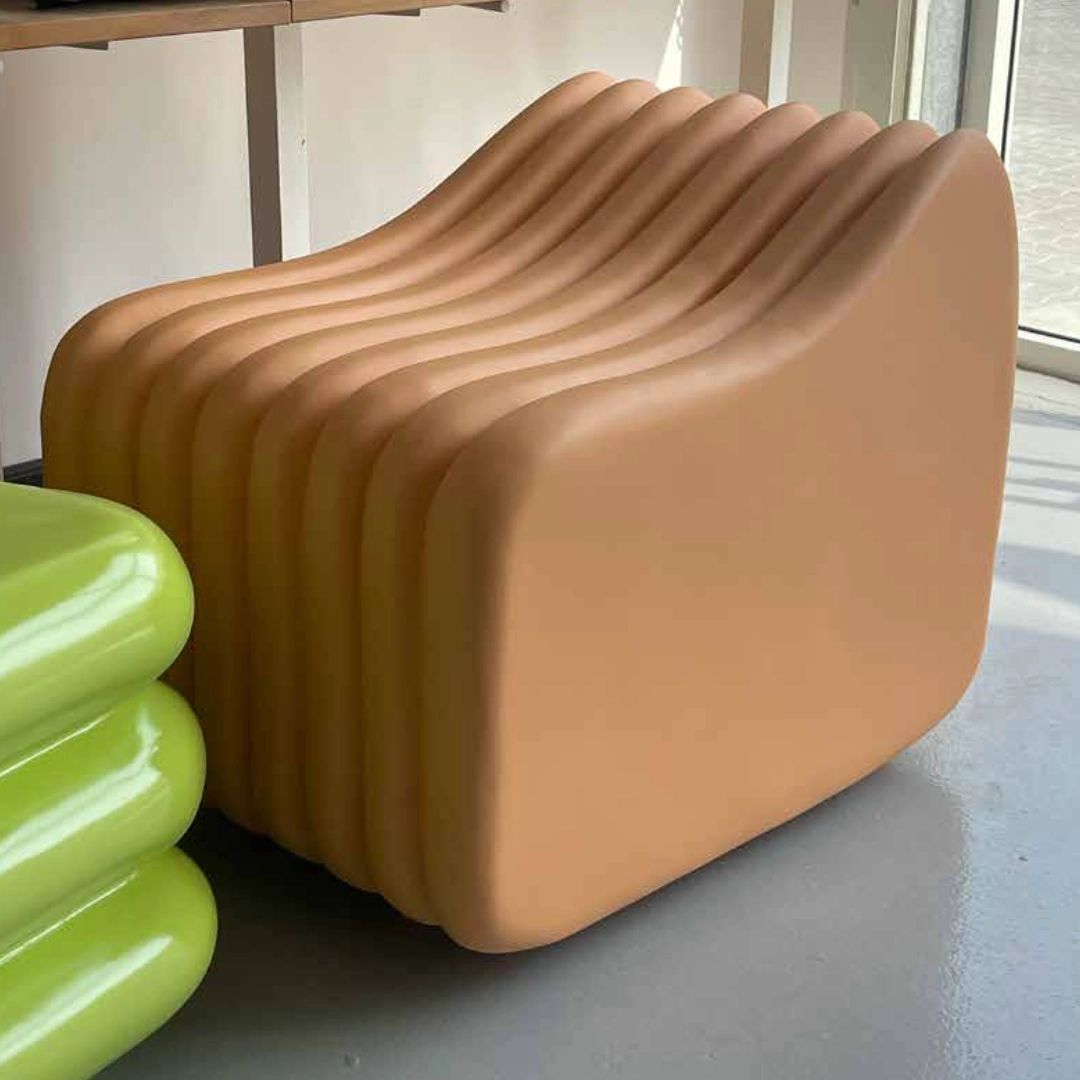
A sketch is more than lines on paper. It's a blueprint for an architectural experience that hasn't yet occupied physical space. You've likely felt the tension of holding a brilliant concept in your hands, wondering if the transition to reality will dilute its soul. It's a common anxiety for designers who fear that technical constraints or file conversion hurdles might strip away the nuance of their original vision.
We believe the journey from 2d drawing to 3d object is a narrative process, not just a manufacturing one. This article provides a professional pathway for transforming conceptual sketches into high-fidelity, tangible physical assets that mirror your exact intent. You'll gain a clear understanding of the digital-to-physical workflow, from choosing between industrial 3D printing and fiberglass to utilizing AI-powered features in AutoCAD 2026. We'll demystify the fabrication process so you can choose a partner with confidence and ensure your final masterpiece retains its artistic integrity.
• Master the transition from 2d drawing to 3d object by understanding how technical precision preserves the original artistic narrative of your concept.
• Identify the essential role of digital sculpting and CAD modeling in translating organic sketches into structurally sound, manufacture-ready data.
• Compare the unique benefits of industrial 3D printing, CNC routing, and fiberglass to determine the most effective pathway for your project's geometric needs.
• Learn how to prepare comprehensive orthographic drawings and scale definitions that eliminate ambiguity during the fabrication process.
• Discover how professional surface finishing and hydro chroming elevate a physical build into a high-fidelity work of art.
• The Evolution of Form: Understanding the 2D to 3D Transition
• The Digital Bridge: Translating Vision into Manufacture-Ready Data
• Selecting the Fabrication Pathway: 3D Printing vs. CNC vs. Fiberglass
• Preparing Your Drawing for Professional 3D Realization
• 3DISTICA: Where Concept Meets Craftsmanship
The journey from 2d drawing to 3d object begins long before a machine starts to hum. This evolution starts with a profound psychological shift. A flat sketch exists in a world of potential, but a spatial presence demands an understanding of weight, gravity, and environmental context. Professional fabrication requires more than a simple 2D to 3D conversion; it necessitates a deep translation of intent. While automated tools offer speed, they often lack the nuance required to turn a conceptual line into a meaningful physical asset that commands a room.
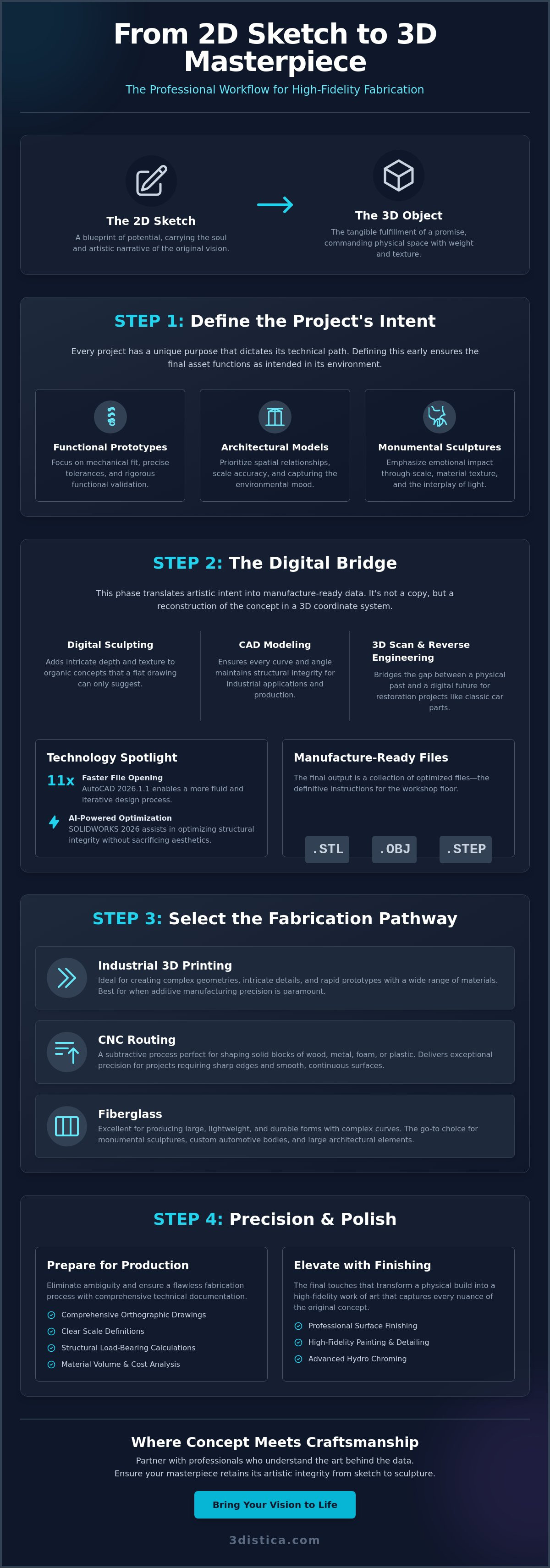
Every project carries a distinct purpose that dictates its technical path. Defining this intent early ensures the final asset functions as intended within its environment:
Focusing on mechanical fit, tolerances, and functional validation.
Prioritizing spatial relationships, scale accuracy, and environmental mood.
Emphasizing the emotional impact of scale, material texture, and the interplay of light and shadow.
A drawing is a promise. A physical object is the fulfillment of that promise. By considering the final material and the spatial feeling of the piece from the outset, we bridge the gap between abstract thought and tangible reality with quiet authority.
True craftsmanship starts by identifying the core narrative elements within your initial sketch. Every line carries an implied volume, a weight that isn't always visible on the page. We look for these subtle cues to understand how a curve should catch the light or how a surface should feel to the touch. This conceptual partnership transforms the process from 2d drawing to 3d object into a collaborative art form. It ensures that the "soul" of the artwork remains intact during its digital birth, moving beyond mere dimensions to capture the essence of the work.
In 2026, technology serves as a sophisticated extension of the artisan's hand. Software like AutoCAD 2026.1.1 now opens files up to 11 times faster, allowing for a more fluid and iterative design process during the early stages of modeling. Meanwhile, SOLIDWORKS 2026 incorporates AI-powered features that assist in optimizing structural integrity without sacrificing the designer's aesthetic vision. These tools provide algorithmic precision, but the human touch remains essential for refining the transition from digital data to tangible material. This balance allows for unprecedented detail, ensuring that even the most intricate custom awards or architectural panels meet the highest standards of high-fidelity visual representation.
The transition from 2d drawing to 3d object requires a rigorous digital bridge where artistic intent meets mathematical reality. A sketch is a whisper; a digital model is a declaration. This phase is not a mere copy of the original drawing. It's a fundamental reconstruction of the concept within a three-dimensional coordinate system. By utilizing advanced manufacturing technologies, designers can now automate the more tedious aspects of geometry creation while focusing their energy on the nuance of the form.
Digital sculpting allows for the addition of intricate depth and texture to organic concepts that a flat drawing can only suggest. For more industrial applications, CAD modeling ensures that every curve and angle maintains structural integrity for production. If the project involves restoring a piece of history, such as classic car parts, 3D scanning and reverse engineering provide the high-fidelity references needed to bridge the gap between the physical past and the digital future. The final output of this stage is a collection of optimized files. Whether it's an STL for printing, an OBJ for visual effects, or a STEP file for CNC routing, these documents are the definitive instructions for the workshop floor.
Precision in the digital phase prevents failure in the physical one. Calculating material volume is about more than just managing costs. It directly influences machine run-time and the cooling cycles required for large-scale builds. We must address structural load-bearing requirements now, ensuring that a monumental sculpture or a set of interior panels won't buckle under its own weight. Technical mockups serve as a vital intermediary step. These smaller-scale versions allow us to verify the "feel" of the object before committing to full-scale fabrication. If you are seeking a bespoke fabrication partner to guide this translation, look for one that prioritizes this level of technical foresight.
Refining the model is where the narrative truly takes shape. Surface detailing can range from a mirror-like industrial finish to complex, organic textures that mimic natural stone or wood. Scaling is equally critical. A digital model that looks perfect on a screen may lose its impact when translated to a monumental size. We use digital twins to predict the final spatial impact of the piece within its intended environment. This allows us to see how light will interact with the surfaces and how the object will influence the mood of the room. It's a process of constant verification, ensuring the final asset is as functional as it is beautiful.
The transition from 2d drawing to 3d object is rarely a single, linear road. It is a curated selection of technologies and materials that must align with the conceptual soul of the project. Choosing the right methodology is a pivotal moment. It determines how the final asset will occupy space and interact with its surroundings. This decision requires a balance of technical precision and artistic foresight, ensuring the medium enhances the message rather than distracting from it.
Industrial 3D printing is the undisputed master of complexity. It allows for high-fidelity visual representation of intricate geometries that would be impossible to achieve through traditional casting. This method is the premier choice for bespoke custom awards and trophies where delicate, interlocking details are paramount. Conversely, CNC routing and laser cutting take center stage when the project demands architectural scale. This methodology serves as the backbone for expansive wall cladding and large-scale styrofoam sculpting, providing the structural foundation for environmental elements that define a space.
Fiberglass products offer a unique blend of structural resilience and artistic flexibility. They remain the gold standard for outdoor installations and kiosks that must endure environmental stress while maintaining a polished, high-end appearance. In many sophisticated projects, we employ hybrid methods. This might involve combining 3D printed details with the enduring strength of a fiberglass shell, creating a piece that is both intricately detailed and remarkably durable.
Material choice is the language of presence. It speaks to the weight of an object and its permanence. When selecting a pathway, we must consider the final placement. Indoor pieces allow for delicate resins and fine finishes, while outdoor assets require UV-stable resins and robust composites. Logistics also play a role. The weight of the material influences transport and installation strategies. In modern fabrication, sustainability is no longer an afterthought; it is woven into the selection of substrates and resins to ensure the work respects the environment it inhabits.
Scale dictates the tool. While a desktop print might suffice for a small maquette, moving to a monumental size requires the heavy lifting of CNC milling. In CNC machining, material costs can account for 30-50% of the total project expense, making the initial digital optimization even more critical. Managing the complexity of multi-part assemblies is an art form in itself. Each segment must be engineered to fit perfectly, yet it is the artisan’s hand-finishing that ultimately hides the seams. This final touch ensures that even the largest sculpture retains the intimate detail of the original drawing.
A professional build is born from clarity. While the initial spark of an idea often resides in a loose sketch, the transition from 2d drawing to 3d object requires a more disciplined architectural approach. High-fidelity fabrication isn't a game of guesswork; it is a process of meticulous translation. To move beyond the limitations of automated approximations, a project must be defined by precise orthographic views that provide a complete spatial map.
Providing front, side, and top perspectives allows the fabricator to calculate volume with absolute certainty. These drawings serve as the definitive source of truth for the digital sculptor. Without them, the "essence" of the work risks being lost in the void between 2D representation and 3D reality. Alongside these views, you must clearly define the intended scale. A maquette for an office desk demands a different level of structural consideration than a monumental sculpture intended for a public plaza.
The environmental context is equally vital. An object's life is defined by its surroundings. Will it sit under the harsh glare of gallery lights or face the unpredictable elements of an outdoor installation? Specifying this context early allows your fabrication partner to select the most appropriate materials, whether that involves industrial 3D printing or robust fiberglass products. Highlighting critical details that must be preserved ensures that the final physical asset remains a faithful reflection of your original vision.
Communication is the bridge between vision and reality. Beyond technical dimensions, you must communicate the "feeling" of the project. Is the surface meant to evoke the cold, sleek precision of a restored car part, or the warm, organic texture of a hand-carved form? Defining the color palette and surface finish requirements, such as hydro chroming or a custom patina, is essential during the briefing phase. This clarity allows for the establishment of realistic timelines, ensuring that the bespoke production project moves forward with grace and predictability.
A drawing can depict what a machine cannot always build. One of the most frequent hurdles is the "impossible geometry," where a 2D line doesn't account for the physical thickness required for structural integrity. Line weights in your drawings must eventually translate to wall thicknesses that can support the object's weight. Managing expectations regarding material-specific limitations is a hallmark of a professional partnership. If you are ready to begin this meticulous journey, you can start your project consultation with our team to ensure every detail is preserved.
The journey from 2d drawing to 3d object reaches its definitive conclusion here. At 3DISTICA, we don't merely manufacture; we manifest. Our studio operates at the nexus of technical rigor and artistic intuition, providing an end-to-end pathway for visionaries who refuse to compromise on their original intent. While many competitors offer automated conversion services that lack depth, we provide a partnership that respects the narrative weight of your design. We understand that a physical asset is the final, tangible word in a creative conversation.
Our work spans the full spectrum of bespoke production projects. Whether we are refining the delicate curves of custom awards or engineering the structural backbone of monumental sculptures, the focus remains on high-fidelity representation. We provide national support for complex builds, ensuring that architectural scale models and maquettes are delivered with the same precision with which they were conceived. This collaborative approach prioritizes artistic integrity, ensuring that the transition from a flat concept to a spatial presence is seamless and sophisticated.
Precision is our baseline. Our methodology is a curated sequence of refinement that begins with an intimate understanding of your creative concept. From our Dubai-based studio, we serve the wider UAE market by bridging the gap between digital data and physical reality. We don't rely on algorithms alone. We integrate digital sculpting with manual craftsmanship to achieve unique results that machines cannot replicate in isolation. This allows us to maintain a steady, curated rhythm throughout the fabrication process, moving from the conceptual purpose to the technical methodology with quiet authority.
Every project we undertake is a commitment to excellence. From the restoration of classic car parts to the creation of large-scale event structures, our portfolio is a testament to the power of tailored quality. We specialize in high-end surface finishing, including hydro chroming and custom textures that define the environmental mood of a space. We believe that a finished asset should do more than just exist; it should evoke a sense of wonder and possibility.
A design is a thought. A finished asset is a physical legacy. We manage the complexities of the digital-to-physical workflow so you can focus on the broader narrative of your work. Our commitment to quality, precision, and narrative ensures that your final object is a masterpiece of modern fabrication. If you are seeking a partner who speaks the language of detail and values artistic integrity as much as you do, we invite you to invite a collaboration on your next project.
The journey from 2d drawing to 3d object is a meticulous evolution where technical precision serves the higher purpose of artistic narrative. You've explored how the digital bridge preserves the soul of a sketch and how choosing between industrial 3D printing or fiberglass depends on the final spatial impact. These decisions aren't merely logistical. They're the essential steps in ensuring a concept retains its integrity when it finally occupies a physical room. By mastering orthographic preparation and material selection, you bridge the gap between abstract thought and tangible reality.
3DISTICA stands at this intersection of art and engineering. Specialized in large-scale fiberglass and industrial 3D printing, we offer end-to-end bespoke production from the first digital sculpt to the final installation. We're proud to be trusted by architects and brand leaders across the UAE to deliver high-fidelity assets that define their environments. Your vision deserves a guardian who understands the weight of every line and the feeling of every space.
We invite you to begin your project with a visionary fabrication partner and witness your abstract ideas transform into a permanent, high-fidelity reality. The space for your next masterpiece is waiting.
Almost any conceptual sketch can initiate the journey from 2d drawing to 3d object. The success of the transition depends on the clarity of the implied volume and narrative intent within the lines. While a single sketch provides the spark, our studio often develops additional perspectives to ensure the final asset captures the exact spatial feeling you intended. This collaborative refinement ensures that even the most abstract thoughts find their footing in the physical world.
Timelines are dictated by the project's complexity and the chosen fabrication pathway. A bespoke custom award might move from digital sculpting to final surface finishing in a matter of weeks. Conversely, a monumental sculpture requires a more expansive schedule to accommodate structural verification and meticulous hand-finishing. We prioritize a steady, curated rhythm that ensures the final piece is as polished and professional as the initial concept demanded.
Fiberglass products remain the gold standard for large-scale outdoor installations. This material offers a unique combination of structural resilience and artistic flexibility that other mediums struggle to match. It's engineered to withstand environmental stress and UV exposure while maintaining a high-fidelity visual representation. For projects requiring both intricate detail and enduring strength, we often combine industrial 3D printing with a robust fiberglass shell.
A hand sketch is an excellent starting point for our visionary artisans. We specialize in translating conceptual drawings into manufacture-ready data using advanced software like SOLIDWORKS 2026. While professional orthographic views are helpful for precision, they aren't a prerequisite for collaboration. Our team acts as a technical guide, building the digital bridge necessary to turn your artistic vision into a tangible reality with quiet authority.
We utilize digital sculpting and high-fidelity modeling to capture the "soul" and nuance of your original concept. Throughout the process, we use digital twins to predict how light and shadow will interact with the form in its intended environment. Technical mockups often serve as a vital intermediary step, allowing us to verify the proportions and feel of the object. This constant verification ensures that the final physical asset is a faithful reflection of your intent.
Industrial 3D printing is the master of intricate detail and complex, organic geometries. It's the ideal choice for smaller, highly detailed pieces like vinyl figures or collectibles. CNC routing and milling are the preferred methods for architectural scale and large-form styrofoam sculpting. We choose the pathway that best aligns with your project's scale, material requirements, and the specific environmental mood you wish to create.
Scaling a conceptual drawing into a monumental presence is a core element of our bespoke production process. We use digital scaling techniques to ensure that the proportions and details of the original sketch translate perfectly to a larger size. This allows us to maintain the artistic integrity of the work while addressing the complex logistics of transport and installation. The result is a high-fidelity masterpiece that commands its spatial environment.
We offer a sophisticated range of finishes designed to enhance the storytelling potential of your design. Options include high-end hydro chroming for a brilliant metallic luster and custom patinas that evoke a sense of organic history. Whether you require a sleek industrial surface or a textured, natural feel, our finishing techniques are meticulously chosen. These details are the final touch in creating an immersive, bespoke art form that resonates with professional excellence.
