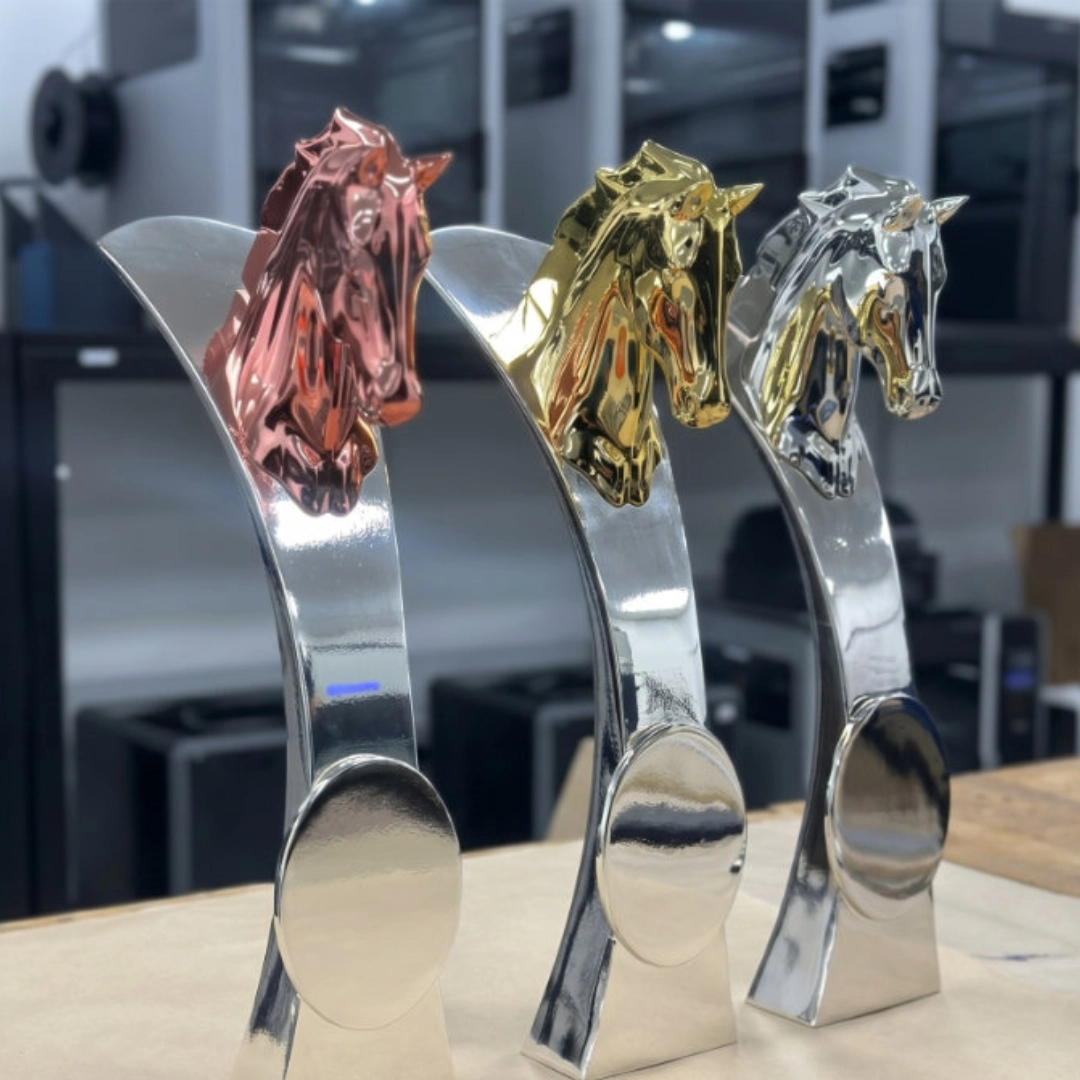
What if the most dangerous moment for a monumental design isn't the initial concept, but the exact second it begins to take up physical space? Scaling a vision from a high-fidelity AutoCAD 2026 model to a massive outdoor installation requires more than just raw material. It demands a perfect translation of intent. You likely understand the frustration when a digital masterpiece loses its soul during production, as the challenges with large scale fabrication often emerge in the friction between a perfect render and the reality of structural integrity.
It's common to worry that a project might suffer from unexpected structural failure or become a logistical nightmare when shipping costs for heavy equipment climb sharply with every mile. We believe that monumental art should never be compromised by technical limitations. This guide explores the critical technical, material, and logistical hurdles you must clear to bridge the gap between visionary design and physical reality. You'll gain a clear framework for selecting materials that endure and the confidence to choose a partner capable of delivering your vision from end to end with elegance and precision.
• Understand the exponential error rule and how to prevent a single millimeter of digital deviation from compromising a monumental physical structure.
• Evaluate the structural advantages of fiberglass and advanced composites when translating digital meshes into load bearing outdoor installations.
• Explore how 3D scanning and reverse engineering preserve the delicate nuances of a design while navigating the technical challenges with large scale fabrication.
• Learn the art of logistical modularization to ensure massive components remain transportable without sacrificing the seamless aesthetic of the final assembly.
• Gain a framework for identifying a visionary partner who offers end to end delivery to minimize project risk and maintain artistic integrity.
Large-scale fabrication is the art of the monumental. It isn't merely about making objects bigger; it's the meticulous production of non-standard, bespoke assets that exist outside the boundaries of mass production. When a project moves from a maquette to a permanent public installation, the physics of the work change entirely. Navigating the unique challenges with large scale fabrication requires a shift in perspective. Precision is no longer a luxury; it's the only thing standing between a visionary landmark and a structural failure.
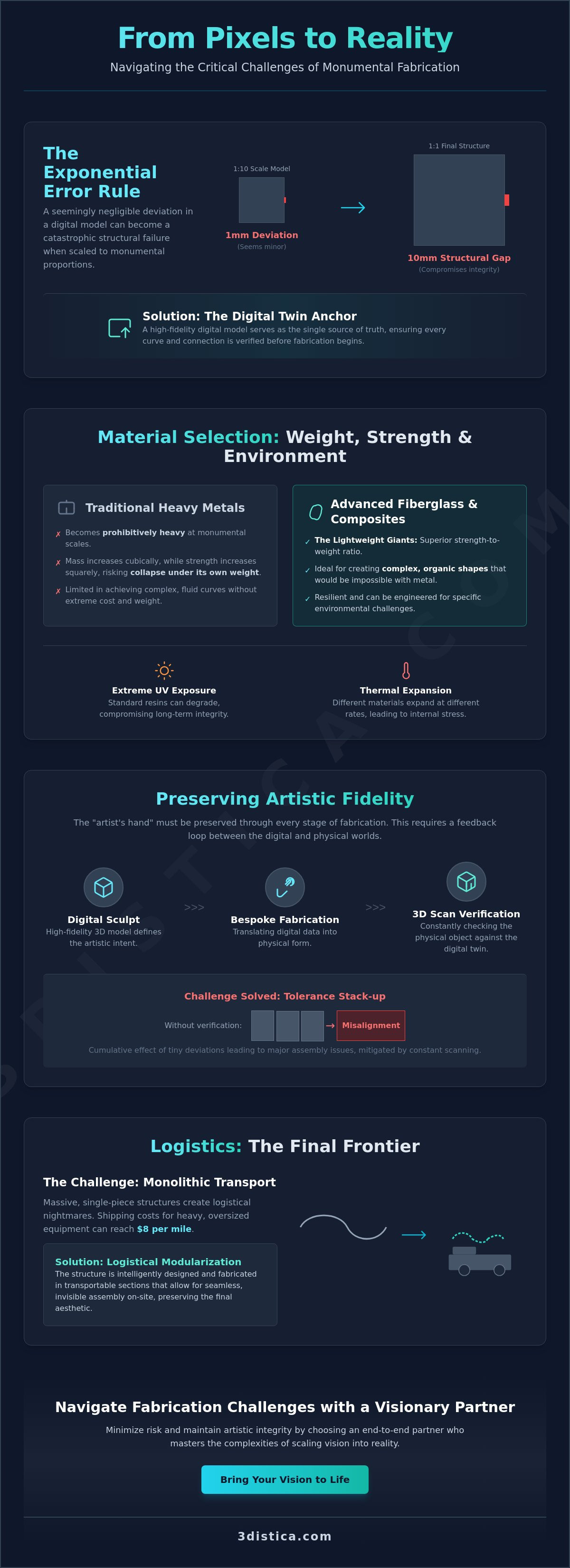
The most unforgiving law of this craft is the "exponential error" rule. A 1mm deviation on a 1:10 scale model might seem negligible to the naked eye. However, when that same design is scaled to its 1:1 reality, that tiny discrepancy becomes a ten-millimeter gap that can compromise a structural seam or a load-bearing joint. To overcome the most persistent challenges with large scale fabrication, we anchor every movement in a high-fidelity digital twin. This digital-first workflow ensures that every curve and connection is verified before a single cut is made. Without this anchor, the project drifts into the territory of guesswork, where tolerances become impossible to manage.
Bespoke monumental assets are fundamentally different from mass-produced industrial components. While traditional metal fabrication processes provide a baseline for cutting and joining, they often lack the nuance required for organic, high-fidelity digital sculpting. A prototype might look stunning at a small scale, but "good enough" measurements fail instantly at an architectural level. In the world of fine art and custom architecture, the "artist's hand" must be preserved through every stage of growth. This requires a sophisticated blend of technical mastery and an artisan's intuition for how volume and light interact with a space.
Environmental forces act as silent disruptors. In the intense UAE climate, thermal expansion is a primary concern that can warp a structure if not properly calculated. Different materials, such as steel and fiberglass, expand at different rates, leading to internal stress. Tolerance stack-up is the cumulative effect of individual part deviations that can lead to significant misalignments in a final assembly. If three components are each off by just two millimeters, the final piece might be six millimeters out of alignment, making it impossible to install. We utilize 3D scanning to bridge this gap, constantly verifying the physical output against the digital intent to ensure that the final reality matches the initial dream.
Reality carries a weight that pixels never will. Moving from a weightless digital mesh to a physical, load-bearing structure represents the most significant shift in any monumental project. One of the primary challenges with large scale fabrication is managing this transition without losing the aesthetic soul of the design. While many fabricators default to heavy metals, we often look toward advanced composites and fiberglass to solve the problem of self-weight. As a sculpture grows in volume, its mass increases cubically, but its structural strength only increases squarely. This physical law means that at a certain scale, a solid metal piece risks collapsing under its own gravity.
In the unique environment of the UAE, material longevity is tested by extreme UV exposure and ambient heat. Standard resins can degrade or soften, compromising the integrity of the entire asset over time. Understanding the challenges of large part fabricating involves selecting materials that resist thermal expansion while maintaining a high-fidelity surface finish. The choice between traditional metal and fiberglass isn't just about cost; it's about the emotional impact and the lifespan of the work in its specific environment. We often find that a hybrid approach provides the most resilient results.
Fiberglass is the preferred medium for complex, organic shapes that demand architectural scale. It allows for fluid curves that would be prohibitively heavy in steel. To ensure structural rigidity, we utilize an internal armature. These steel skeletons act as the bones of the piece, providing necessary support while the fiberglass skin creates the evocative visual form. This synergy allows us to balance a refined surface quality with the strength required for permanent outdoor installations.
Large-format 3D printing has redefined what's possible in bespoke fabrication. We overcome the size limitations of standard machinery through modular printing, where a massive design is divided into precise sections. Choosing the right material is vital. While PLA is common for prototypes, specialty resins and industrial-grade polymers are required to prevent cleavage between printed layers. Ensuring high bond strength between these segments is a critical part of our process. If you're ready to explore these possibilities, our team can help you select the ideal material for your next monumental vision.
The most profound tension in a monumental project is the "Creative Gap." It's the space where technical constraints threaten to dilute the original vision. One of the primary challenges with large scale fabrication is ensuring that the soul of a sculpture isn't lost in the machinery of its creation. We don't just build structures; we translate emotions into physical form. When an artist hands over a delicate maquette, our role is to ensure that the sweeping curves and subtle textures are preserved, even when scaled to ten meters in height. It requires a deep understanding of how light and shadow interact with volume at an architectural level.
Precision at this scale mirrors the meticulous nature found in other scientific fields. While we operate at a massive scale, we respect the same principles of accuracy detailed in the Grand Challenges in Nanofabrication, where every micron of deviation matters. By utilizing high-resolution 3D scanning and reverse engineering, we capture the "artist's hand" in a digital environment. This allows us to scale the work without losing the human touch that makes the piece unique. CNC routing and laser cutting then provide the skeletal accuracy needed to carve these shapes into reality with perfect proportions, bridging the distance between a small model and a colossal landmark.
Translating an abstract concept into a manufacture-ready CAD file is a collaborative dance between the designer and the technician. We use subdivision modeling to ensure that surfaces remain smooth and continuous, even at an architectural scale. This digital sculpting process allows us to optimize geometry for structural stability while maintaining the aesthetic flow. It's about finding the harmony between what is beautiful and what is physically possible. Our team works closely with creators to refine these digital twins, ensuring the final physical output is a perfect mirror of the intended design.
The final 5% of labor often accounts for 50% of the visual impact. This is where the project truly comes alive. Whether we are applying hydro-chroming for a mirror-like sheen or automotive-grade paints for deep, lustrous color, the finish defines the mood of the space. Maintaining color consistency across a massive surface area is one of the true challenges with large scale fabrication. It requires a controlled environment and a master's eye for detail. We treat every panel as a canvas, ensuring that the final texture invites the viewer into a transformative experience that feels bespoke rather than industrial.
Logistics is the silent architect of a project's success. It's the moment where the ethereal beauty of a design meets the hard reality of infrastructure and physics. One of the most daunting challenges with large scale fabrication involves the transition from a controlled studio environment to a permanent public site. You can't simply move a twenty-meter sculpture in one piece. It must be envisioned as a series of interlocking components, each designed to navigate the constraints of transport without sacrificing the visual continuity of the whole.
In the UAE, this process is governed by strict road regulations. Wide-load transport requires meticulous planning, often involving specialized permits and coordinated escorts for assets that exceed standard dimensions. We manage these complexities by employing "Logistical Modularization," a strategy that treats a massive installation as a sophisticated puzzle. By breaking the piece into transportable sections, we ensure that the journey doesn't compromise the high-fidelity finish or structural integrity of the work. This foresight prevents the logistical nightmares that often plague projects that weren't designed with the road in mind.
Successful delivery begins with the internal architecture of the piece. We create hidden mechanical joints that allow for seamless reassembly on-site, ensuring that the structural bones remain invisible to the viewer. Weight distribution is equally critical. Every section must have engineered hoist points for safe crane operations, preventing stress fractures during the lift. We also employ bespoke packing solutions to protect delicate surface finishes, such as hydro-chroming or automotive-grade paints, from the rigors of the journey across the Emirates.
The final installation must feel as though it grew from the space itself. This requires more than just a crane and a crew; it requires an artisan's touch. In the UAE, we must account for significant wind loads and specific seismic requirements to ensure public safety and long-term stability. Once the modules are anchored, we utilize "invisible seam" techniques. This involves on-site fiberglass patching and meticulous paint blending to make the joints disappear entirely. The result is a single, breathtaking form that captures the emotional essence of the environment. If you're ready to bring a monumental vision to life, connect with our installation team to discuss your project's unique logistical needs.
Precision is the silent protector of beauty. In the final phase of a monumental project, the technical details must fade into the background so that the narrative intent can shine. Many of the challenges with large scale fabrication arise from a fragmented process where the vision is handed off between multiple uncoordinated vendors. When a project is split between separate designers, engineers, and fabricators, the "artist's hand" is often lost in translation. We believe that true excellence requires a single, unbroken thread of accountability from the first digital scan to the final installation.
The 3DISTICA methodology serves as a bridge between the artisan and the technician. We don't simply manufacture objects; we curate the transition from an abstract idea to a tangible visual reality. This end-to-end support reduces project risk by ensuring that the structural requirements of a piece are baked into the design from the very beginning. By maintaining a holistic view of the project, we ensure that technical precision always serves the emotional impact of the space. It's a collaborative journey where your vision remains the primary compass.
Eliminating the "vendor merry-go-round" is essential for maintaining the integrity of a landmark project. By keeping design, 3D scanning, and production in-house, we provide a level of transparency that is impossible with outsourced workflows. You receive a clear, predictable timeline that moves logically from high-fidelity digital mockups to the final physical delivery. We speak the language of architects who demand structural perfection and artists who prioritize spatial feeling, acting as the collaborative guide that brings these two worlds together in harmony.
The future of fabrication lies in the seamless integration of technology and craftsmanship. We combine industrial 3D printing and CNC routing with the soul of manual fiberglass sculpting to solve the most complex challenges for our UAE clients. Whether it's a bespoke interior panel or a colossal outdoor sculpture, our focus remains on delivering a final outcome that feels both technologically superior and deeply human. We invite you to collaborate with us on your next landmark project, where we can explore the intersection of technical mastery and artistic integrity together.
Monumental design is a dialogue between the abstract and the physical. We've explored how absolute precision anchors a project and why the right material selection ensures structural longevity in demanding environments. Successfully overcoming the challenges with large scale fabrication requires a synthesis of technical mastery and logistical foresight. It's about ensuring that the final installation carries the same emotional weight as the original digital model. Every curve and seam must be curated to preserve the soul of your vision.
At 3DISTICA, we specialize in bridging this gap through high-fidelity fiberglass products and industrial 3D printing. We provide end-to-end support that guides your project from initial digital sculpting to meticulous on-site installation. UAE architects and event designers trust us to deliver bespoke assets that defy conventional limits while maintaining total artistic integrity. We invite you to partner with 3DISTICA for your next monumental project and witness your most ambitious concepts take form. Let's create something that resonates for generations.
Fiberglass and high-grade composites are the primary choices for monumental outdoor works in the Emirates. These materials are favored because they offer an exceptional weight-to-strength ratio, allowing for fluid, organic forms that would be prohibitively heavy in solid metal. We often combine these with internal steel armatures to provide the necessary structural skeleton for permanent public installations.
We maintain integrity by utilizing industrial-grade polymers and sophisticated internal lattice structures. Rather than printing a solid mass, we engineer the internal geometry to provide maximum support with minimal weight. For monumental assets, we also employ modular printing techniques and reinforce the sections with internal skeletons to ensure the piece can withstand environmental stresses and its own self-weight.
Yes, fiberglass is remarkably resilient when treated with specialized UV-resistant gel coats and automotive-grade finishes. These protective layers act as a shield, preventing the structural resins from degrading or becoming brittle under the intense Gulf sun. Our finishing process ensures that the asset retains its vibrant color and structural stability even in temperatures that frequently exceed 40 degrees Celsius.
Timelines for monumental projects are as unique as the designs themselves, often spanning several months from concept to completion. This duration accounts for the high-fidelity digital sculpting phase, the modular production of sections, and the meticulous manual finishing required for a bespoke result. We provide a curated schedule that moves logically through each technical milestone to ensure a seamless delivery.
We utilize a process called logistical modularization to transport massive works safely across the UAE. By designing the piece to be disassembled into precise sections, we can protect each component within bespoke crates that fit specialized wide-load carriers. This strategy ensures that the work arrives on-site without a single scratch on its high-fidelity surface, ready for final assembly by our rigging team.
3D scanning is the vital link that preserves the "artist's hand" during the transition from a small maquette to a colossal structure. It allows us to create a perfect digital twin that serves as the blueprint for all subsequent production steps. This high-resolution verification is critical for identifying potential challenges with large scale fabrication, such as volume discrepancies or joinery issues, before they reach the physical production stage.
CNC milling is a subtractive process that's ideal for carving massive, solid volumes out of materials like high-density foam or wood with incredible speed. Industrial 3D printing is an additive process that excels at creating complex, hollow geometries and intricate internal details that are impossible to carve. We often combine both technologies to solve the unique challenges with large scale fabrication, selecting the method that best serves the project's aesthetic and structural goals.
We manage costs through meticulous digital planning and an end-to-end production model. By utilizing tools like AutoCAD 2026 for precise modeling, we minimize material waste and eliminate the need for costly physical iterations. Keeping the entire process from 3D scanning to installation under one roof allows us to maintain a transparent timeline and avoid the hidden fees often associated with fragmented vendor networks.
